
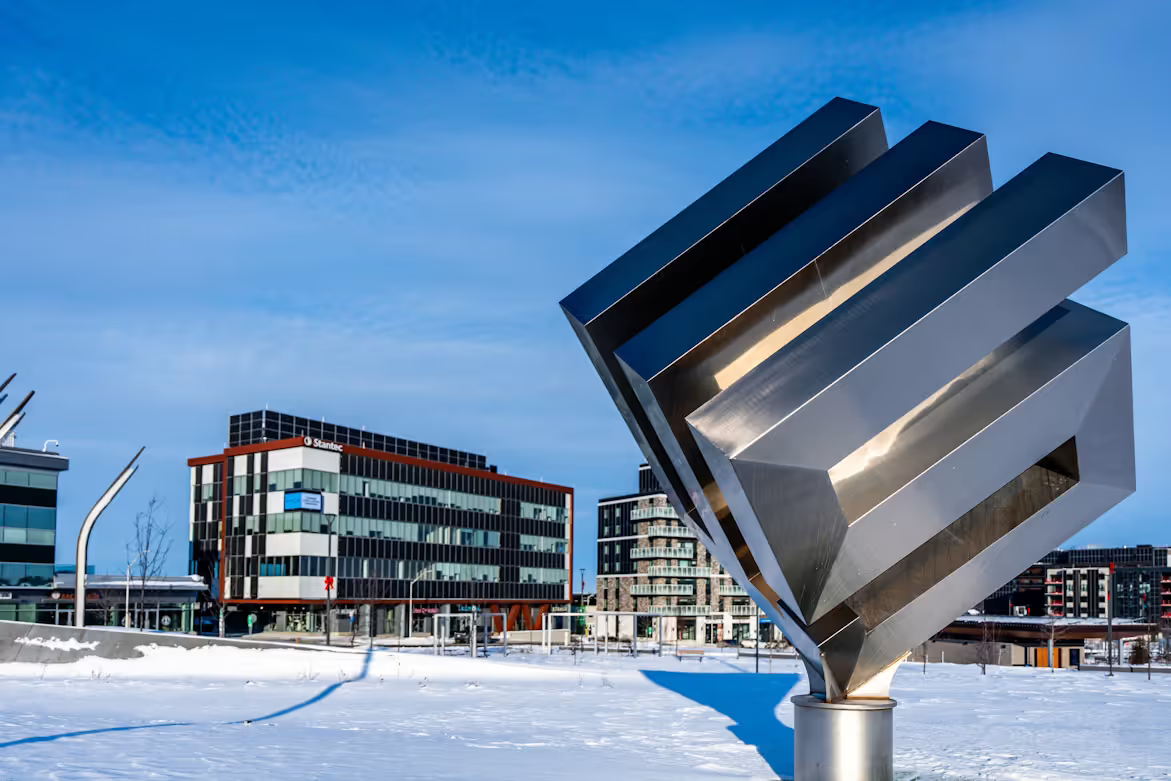
Unlike paintings that hang on walls or photographs displayed inside galleries, sculpture exists within the same physical space as its audience. It shares our streets, gardens, parks, waterfronts, museums, and civic squares, inviting people to move around it rather than simply look at it from a distance. This unique relationship between artwork, environment, and viewer has allowed sculpture to shape public life for thousands of years.
Throughout history, sculpture has served many purposes. It has commemorated important events, celebrated craftsmanship, expressed religious beliefs, explored abstract ideas, and transformed ordinary public spaces into places of reflection. Today, contemporary sculptors continue expanding these possibilities by experimenting with innovative materials, environmental themes, architectural collaborations, and large-scale installations that encourage interaction rather than passive observation.
For visitors, encountering a sculpture outdoors often feels different from viewing art inside a museum. Changing weather, natural light, surrounding architecture, and the movement of people all influence how the work is experienced. A sculpture viewed in morning sunlight may feel entirely different at sunset, reminding us that public art continues evolving alongside the environments it inhabits.
Collectors also appreciate sculpture for its ability to occupy space in distinctive ways. Rather than creating an illusion of depth on a flat surface, sculpture introduces genuine volume, texture, balance, and material presence. Whether carved from stone, cast in bronze, assembled from steel, or shaped from ceramic, each work invites viewers to engage physically as well as visually.
Understanding sculpture as part of everyday life reveals why it remains one of the most influential forms of artistic expression. It not only reflects culture—it actively shapes the places where culture unfolds.
More Than a Monument
Many people still associate sculpture primarily with historical monuments or commemorative statues.
While these remain important, contemporary sculpture has expanded far beyond traditional forms.
Today's sculptors create works that explore movement, memory, identity, landscape, sustainability, architecture, and community. Some installations encourage visitors to walk through them, while others respond to wind, water, light, or seasonal change.
This diversity has transformed sculpture into one of the most experimental artistic disciplines.
Rather than simply representing people or events, contemporary sculpture often asks viewers to experience space itself in new ways.
Sculpture and Architecture
One of sculpture's greatest strengths is its relationship with architecture.
Public sculptures rarely exist independently of their surroundings. Artists carefully consider nearby buildings, open spaces, pathways, vegetation, and patterns of movement before deciding how a work should be positioned.
A successful sculpture does more than occupy an empty location.
It creates dialogue with the environment.
Sometimes it becomes a landmark that helps define a neighbourhood. In other cases, it quietly complements an existing landscape without dominating it.
This conversation between sculpture and architecture explains why public artworks often become inseparable from the places they inhabit.
Materials That Tell Their Own Story
Every sculptural material contributes something unique to the finished work.
Stone suggests permanence.
Bronze develops rich patinas over time.
Wood reflects natural warmth and craftsmanship.
Steel introduces strength and precision.
Glass interacts with changing light.
Ceramic celebrates the hand of the maker.
Many contemporary sculptors combine several materials within a single project, creating contrasts that encourage viewers to think differently about texture, balance, and form.
Understanding these materials helps visitors appreciate sculpture not only as visual art but also as an exploration of physical substance and craftsmanship.
Sculpture Invites Participation
Unlike many forms of visual art, sculpture encourages movement.
Visitors naturally walk around a sculpture, viewing it from different angles and distances. Every step reveals new relationships between form, shadow, proportion, and surrounding space.
This physical interaction creates a more active experience than simply standing before a painting. A sculpture may appear monumental from one direction and unexpectedly delicate from another. Openings within the work frame parts of the landscape, while changing sunlight continuously alters surfaces throughout the day.
Many contemporary sculptors intentionally design works that encourage this type of exploration.
Some installations allow visitors to walk through them. Others respond to wind, water, or light, making the artwork itself part of a constantly changing environment.
For audiences, sculpture becomes something experienced rather than simply observed.
Sculpture Parks and Open-Air Collections
One of the most exciting developments in recent decades has been the growing popularity of sculpture parks.
Unlike traditional museums, sculpture parks allow artworks to exist within natural landscapes where trees, gardens, lakes, hills, and changing seasons become part of the viewing experience.
A sculpture placed among autumn foliage communicates differently from the same work displayed against winter snow or spring blossoms. Weather, light, and vegetation all influence how visitors understand the artwork.
These environments also encourage slower exploration.
Rather than moving quickly from gallery to gallery, visitors wander through outdoor spaces where each sculpture appears gradually within the landscape.
Collectors often visit sculpture parks to experience how large-scale works interact with their surroundings before considering outdoor installations for private collections.
The relationship between art and nature remains one of the defining strengths of these spaces.
The Challenge of Conservation
Displaying sculpture outdoors presents unique conservation challenges.
Unlike artworks protected inside climate-controlled museums, public sculptures face continuous exposure to sunlight, rain, humidity, pollution, temperature changes, and occasional physical wear.
Conservators therefore monitor outdoor works regularly.
Bronze surfaces may require specialised cleaning and protective wax coatings. Stone sculptures are inspected for cracks caused by water infiltration or seasonal temperature changes. Steel, wood, and mixed-media works each demand different conservation strategies depending on their materials and environmental conditions.
Preventive conservation remains the most effective approach.
Routine maintenance often protects sculptures more successfully than extensive restoration carried out after significant deterioration has occurred.
These conservation efforts ensure that public artworks remain accessible while preserving the artist's original intention.
Collecting Sculpture
Many first-time collectors hesitate before purchasing sculpture because they imagine it requires large homes or expansive gardens.
In reality, sculpture exists in an extraordinary range of scales.
Small ceramic pieces, bronze studies, carved wooden objects, and contemporary tabletop sculptures fit comfortably within domestic interiors while offering the same richness of material and craftsmanship found in larger works.
When collecting sculpture, several considerations become especially important:
- How does the work relate to the surrounding space?
- Can it be appreciated from multiple viewpoints?
- Does the material suit its intended environment?
- How should lighting enhance the form?
- Does the sculpture encourage continued observation?
Unlike wall-mounted artworks, sculpture influences the flow of a room.
Collectors therefore consider placement as carefully as the artwork itself.
A thoughtfully positioned sculpture becomes part of everyday life, rewarding repeated viewing from different perspectives.
Sculpture as Community Identity
Across cities and towns around the world, public sculptures often become landmarks that define local identity.
People arrange to meet beside them.
Children grow up recognising them.
Visitors photograph them.
Communities celebrate them as symbols of shared history and culture.
Over time, these artworks become woven into everyday life.
Their importance extends beyond artistic merit alone because they help create emotional connections between people and places.
Many of the world's most recognised public spaces would feel incomplete without the sculptures that have become part of their identity.
This enduring relationship demonstrates sculpture's remarkable ability to shape not only landscapes but also collective memory.
Why Sculpture Continues to Evolve
Contemporary sculptors continue challenging traditional expectations.
New materials, digital fabrication, environmental research, recycled resources, sound, light, and interactive technologies have expanded the possibilities available to artists while preserving sculpture's essential relationship with physical space.
Despite these innovations, one principle remains unchanged.
Sculpture invites people to slow down.
It asks viewers to observe carefully, move thoughtfully, and consider how objects occupy the world around them.
Whether carved by hand from stone or constructed using advanced technology, sculpture continues encouraging direct engagement between artwork, place, and audience.
Collector's Insight
The finest sculptures reward movement. Walk around them, observe them in changing light, and allow the surrounding space to become part of the artwork itself.
Conclusion
Sculpture occupies a unique position within the visual arts because it shares the same physical space as its audience. It transforms parks, city squares, gardens, museums, and private collections through works that invite movement, curiosity, and reflection. Rather than existing as images alone, sculptures engage with architecture, landscape, weather, and human experience in ways that continually evolve over time.
For collectors, sculpture offers an opportunity to experience art as both object and environment. Every carefully crafted form reflects decisions about material, proportion, balance, and space while encouraging viewers to look from multiple perspectives. These qualities create lasting relationships between artwork and audience that deepen with repeated encounters.
Whether discovered in a public park, a sculpture garden, an artist's studio, or a private collection, sculpture reminds us that art has the power not only to decorate spaces but to redefine how we experience them. Its enduring presence within everyday life ensures that it remains one of the most compelling and influential forms of creative expression.
Discover thoughtful editorial features exploring sculpture, contemporary artists, public art, collecting, and the craftsmanship shaping today's creative landscape.
Related Story
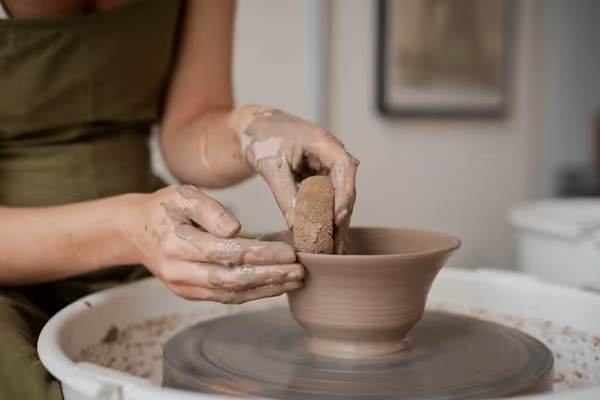
Why Contemporary Ceramics Belong in Serious Art Collections

Alexander Moreau
Design writer and curator covering collectible design, architecture, decorative arts, and contemporary craftsmanship. His work explores the intersection of art, function, and cultural value.