
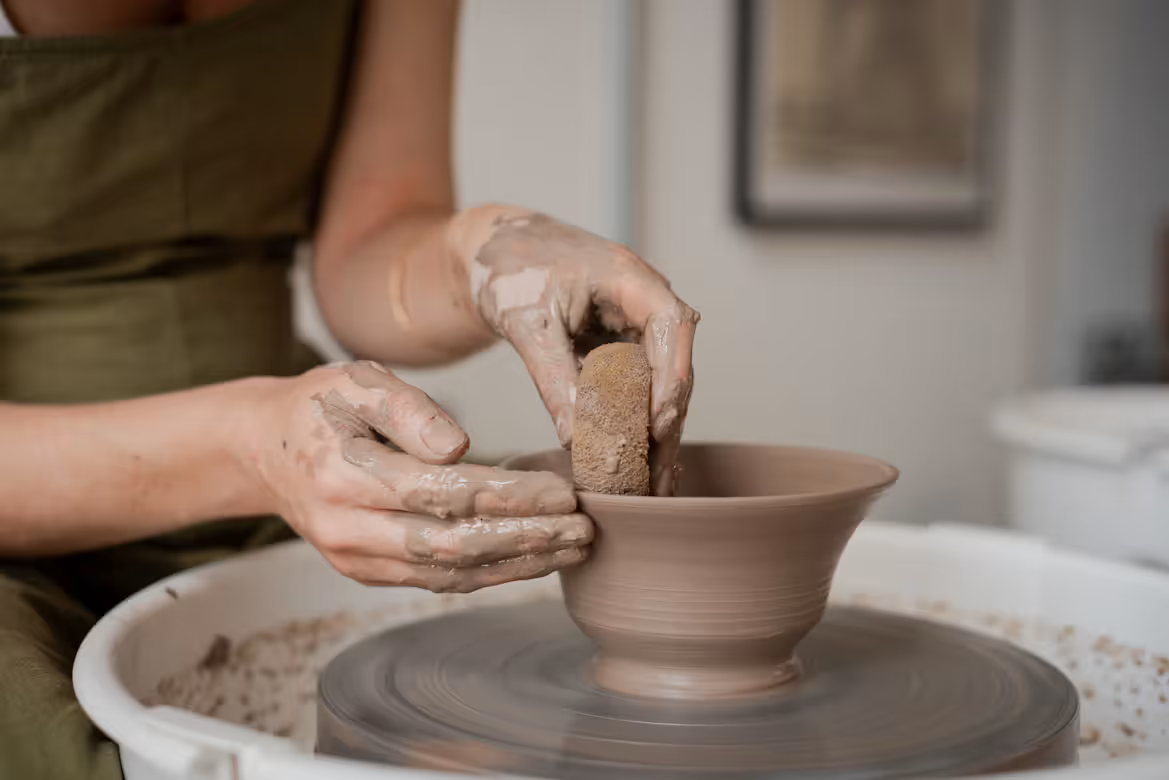
For thousands of years, clay has been shaped into vessels, sculptures, architectural details, and objects of everyday life. Few artistic materials possess such a long and continuous history of human creativity. Yet contemporary ceramics are far from historical traditions preserved unchanged. Today's ceramic artists continually redefine what the material can become, transforming clay into bold sculptural forms, conceptual installations, collectible design objects, and expressive works that challenge expectations.
This evolution has reshaped the way collectors view ceramics.
Once associated primarily with functional pottery or decorative objects, contemporary ceramics now occupy an important place within galleries, museums, design fairs, and private collections. Artists experiment with scale, texture, glazing techniques, firing methods, and unconventional forms, producing works that exist comfortably between sculpture, craft, and fine art.
One reason ceramics continue attracting collectors is their remarkable combination of physical presence and human touch. Every fingerprint impressed into wet clay, every subtle variation created during firing, and every carefully applied glaze reflects direct engagement between artist and material. Unlike industrial manufacturing, handmade ceramics preserve evidence of the creative process within the finished object itself.
Collectors are increasingly drawn to this authenticity.
In a world where many objects are mass-produced, contemporary ceramics celebrate patience, craftsmanship, and individuality. Every piece carries slight variations that make it unique, reinforcing the idea that artistic value often emerges through careful making rather than mechanical perfection.
Understanding why ceramics occupy such an important place within contemporary collecting reveals something broader about today's art world. Collectors are not simply seeking beautiful objects. They are seeking works that express material knowledge, creative experimentation, and enduring craftsmanship.
Clay as a Creative Medium
Working with clay demands a unique combination of technical understanding and creative freedom.
Unlike stone, which is carved away, or bronze, which is cast into moulds, clay remains remarkably responsive throughout much of the creative process. Artists can build, remove, reshape, compress, and refine forms repeatedly before firing permanently fixes the final result.
This flexibility encourages experimentation.
Some artists create elegantly balanced vessels inspired by centuries of ceramic tradition, while others produce abstract sculptural forms that challenge conventional expectations of the material.
Because clay records every touch, it preserves the gestures of the maker with extraordinary honesty.
Even after firing, these subtle traces remain visible, giving ceramic works a deeply personal character.
Fire Completes the Artwork
The kiln is not simply a finishing stage.
It is an active creative partner.
Heat transforms fragile clay into durable ceramic while fundamentally changing colour, texture, density, and surface appearance. Glazes melt, minerals react, and subtle variations emerge that cannot always be predicted with complete certainty.
This element of controlled unpredictability distinguishes ceramics from many other artistic disciplines.
Artists carefully prepare every stage, yet the firing process always retains a degree of surprise.
Experienced ceramicists learn to embrace this relationship rather than attempting to eliminate it.
Collectors often appreciate these natural variations because they demonstrate the living relationship between craftsmanship and material.
Beyond Function
Although ceramics have long served practical purposes, many contemporary artists intentionally move beyond functionality.
Vessels become sculptural explorations of form.
Bowls evolve into abstract compositions.
Architectural influences merge with organic shapes.
Surface decoration becomes visual storytelling.
The result is work that encourages contemplation rather than use.
Collectors increasingly value these objects not because they perform everyday tasks, but because they communicate ideas through material, proportion, texture, and craftsmanship.
This shift has firmly established ceramics within the broader conversation of contemporary art.
Glazing: Where Chemistry Meets Creativity
One of the most distinctive characteristics of ceramic art is the remarkable variety of surfaces that emerge during glazing and firing.
Glaze is far more than a decorative finish.
It influences colour, texture, depth, reflection, and the tactile quality of every piece. Depending on the minerals used and the firing conditions, glazes may produce glossy, matte, crystalline, translucent, or richly textured surfaces that transform the appearance of the clay beneath.
Many ceramic artists spend years refining their glaze recipes.
Small adjustments in temperature, mineral composition, or firing atmosphere can dramatically change the final result. A surface expected to appear smooth may develop subtle crystalline patterns, while a matte glaze may reveal unexpected depth under natural light.
These subtle variations make every firing a unique creative event.
For collectors, the glaze often becomes one of the first qualities that invites closer observation, rewarding attention with increasingly complex visual details.
Why Collectors Value Contemporary Ceramics
Collectors are increasingly recognising ceramics as an important part of contemporary artistic practice.
Rather than viewing ceramic works solely as decorative objects, they appreciate the medium's ability to combine sculpture, design, craftsmanship, and material exploration within a single form.
When considering a ceramic artwork, collectors often pay attention to several qualities:
- Originality of form.
- Technical craftsmanship.
- Balance and proportion.
- Surface treatment and glazing.
- Relationship between concept and material.
- Presence within a living space.
Equally important is the artist's broader creative practice.
Collectors frequently explore multiple bodies of work before making acquisitions, observing how ideas evolve across different series while maintaining a consistent artistic language.
This thoughtful approach encourages collections built upon long-term appreciation rather than short-term trends.
Displaying Ceramic Art
Ceramic works reward thoughtful presentation.
Unlike paintings that occupy wall space, ceramics interact directly with surrounding architecture, furniture, and natural light. Their three-dimensional form encourages viewers to move around them, appreciating changing silhouettes, textures, and glazing effects from multiple angles.
Collectors often display ceramics individually rather than in large groups.
Generous space allows each piece to maintain its own visual presence while highlighting subtle details that might otherwise go unnoticed.
Lighting also plays a significant role.
Soft natural light reveals delicate glaze variations, while carefully positioned artificial lighting can emphasise texture, depth, and sculptural form during the evening.
Rather than treating ceramics as decorative accessories, experienced collectors display them with the same consideration given to sculpture or fine art photography.
Caring for Ceramic Collections
Although fired ceramics are remarkably durable, they still benefit from thoughtful handling and display.
Collectors typically follow a few simple principles:
- Place ceramic works on stable, level surfaces.
- Avoid positioning delicate pieces where they may be easily knocked or vibrate frequently.
- Dust regularly using a soft microfiber cloth or clean brush.
- Lift objects by their strongest structural areas rather than handles, rims, or decorative extensions.
- Preserve invoices, certificates, exhibition catalogues, and artist documentation to maintain provenance.
Proper care allows ceramic collections to retain both their physical condition and historical significance over many decades.
Craftsmanship That Invites Slow Looking
Contemporary ceramics encourage a different pace of observation.
Unlike digital images encountered briefly on screens, handmade ceramic objects invite viewers to slow down.
Light reveals subtle glaze transitions.
Finger marks left during shaping become visible.
Small asymmetries demonstrate the presence of the maker's hand.
Textures encourage closer examination.
The longer a collector spends with a ceramic work, the more details begin to emerge.
This quiet richness explains why ceramics continue occupying an important place within both contemporary collections and museum exhibitions.
Rather than demanding immediate attention, they reward patience.
Collector's Insight
Great ceramic art reveals the conversation between the artist, the clay, the fire, and time. Every surface tells part of that story.
Conclusion
Contemporary ceramics demonstrate that one of humanity's oldest artistic materials continues to inspire remarkable creative innovation. Through careful craftsmanship, experimental glazing, and thoughtful exploration of form, artists transform clay into works that exist comfortably between sculpture, design, and fine art. Every piece reflects a balance between technical mastery and creative expression, preserving the direct relationship between the maker and the material.
For collectors, ceramics offer an opportunity to engage with artworks that reward both visual observation and tactile imagination. Their subtle textures, evolving glaze effects, and sculptural presence encourage slower looking, making them ideal companions within thoughtfully designed living spaces and carefully curated collections.
Ultimately, contemporary ceramics remind us that enduring artistic value is often created through patience rather than speed. From the first touch of wet clay to the final firing, every stage of the process contributes to objects that continue connecting craftsmanship, creativity, and everyday life across generations.
Discover thoughtful editorial features exploring collectible design, contemporary craft, sculpture, and the artists shaping today's creative culture through ModernPress.
Related Story
When Architecture Becomes a Work of Art

Alexander Moreau
Design writer and curator covering collectible design, architecture, decorative arts, and contemporary craftsmanship. His work explores the intersection of art, function, and cultural value.