
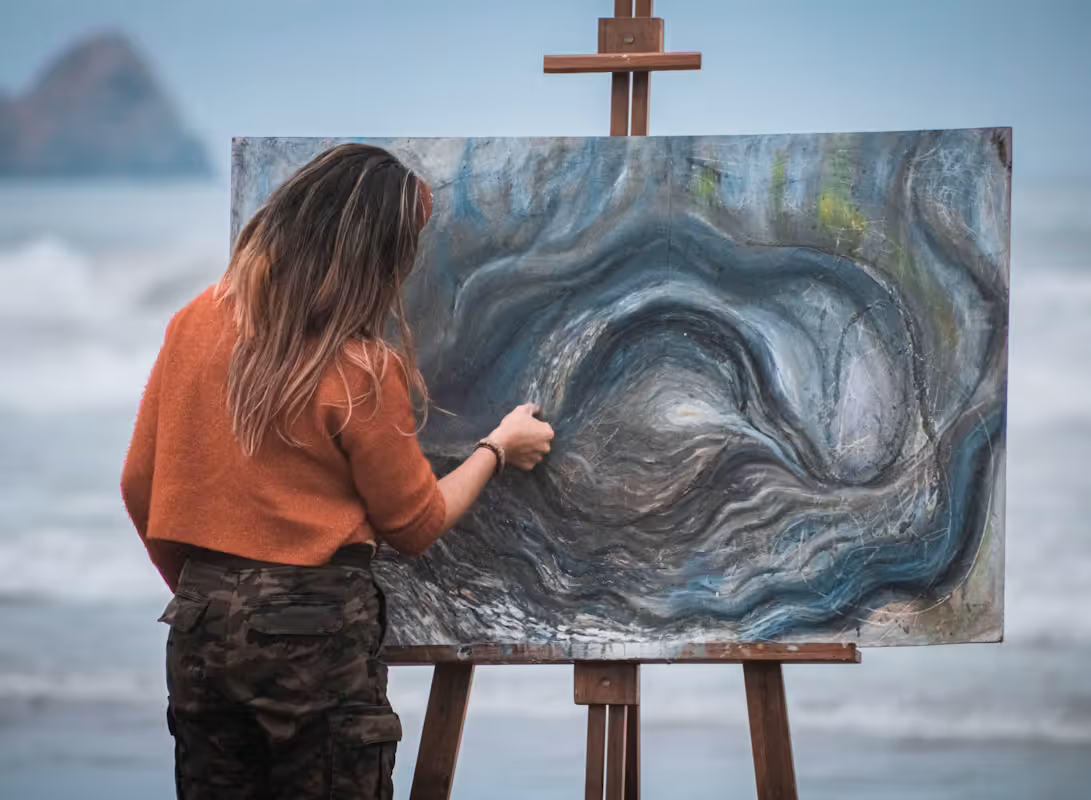
For thousands of years, people have turned to art as a way of making sense of the world around them. Long before written history became widespread, early civilizations painted on cave walls, carved stone into symbolic forms, shaped clay into ceremonial vessels, and constructed buildings that reflected their beliefs and ambitions. These creations were more than decorative objects—they preserved stories, recorded traditions, celebrated achievements, and expressed ideas that words alone could not fully capture.
Although the materials and techniques available to artists have evolved dramatically, the purpose of art has remained remarkably consistent. Every generation has sought to express its experiences, question familiar ideas, and leave behind a visual record of its time. Whether created with charcoal, bronze, oil paint, a camera, or digital technology, meaningful works of art continue to explore what it means to be human.
In today's fast-moving world, where information is consumed in seconds and images disappear almost as quickly as they appear, art offers something increasingly valuable: the opportunity to pause. A painting encourages quiet observation, a sculpture invites viewers to move around it, and a photograph captures a fleeting moment that can be revisited for years. Unlike content designed for immediate consumption, great art rewards patience. The longer we spend with it, the more it reveals.
This ability to remain relevant across generations is one of art's greatest strengths. A work created hundreds of years ago can still provoke thought, inspire creativity, or stir emotion because its meaning is never fixed. Every generation approaches it with different experiences, different questions, and a different cultural perspective. As society changes, so too does the conversation surrounding the artwork.
Rather than providing definitive answers, art encourages curiosity. It asks us to observe more carefully, think more deeply, and remain open to interpretations that may differ from our own. That ongoing dialogue is what keeps art alive, ensuring that it remains an active part of contemporary culture rather than simply a record of the past.
Art Reflects the Human Experience
One of the most remarkable qualities of art is its ability to preserve moments that would otherwise disappear. A portrait captures more than a person's appearance—it reveals character, identity, and the values of the period in which it was created. A landscape documents changing environments and the relationship between people and nature. Photography freezes moments that can never be repeated, while architecture records the aspirations of societies through the spaces they build and inhabit.
Even abstract works, which may not depict recognisable subjects, communicate emotion, movement, and ideas in ways that often transcend language. They remind us that not every meaningful experience can be explained with words. Sometimes colour, texture, form, and composition express feelings more honestly than any written description.
Together, these diverse artistic disciplines create an extraordinary visual archive of human history. They preserve not only major historical events but also everyday experiences, personal memories, cultural traditions, and creative breakthroughs. Looking at art from different periods allows us to understand how earlier generations viewed the world while encouraging us to reflect on our own place within it.
Creativity Begins with Curiosity
Every memorable artwork begins with a question rather than an answer. Artists rarely start with complete certainty about the outcome they hope to achieve. Instead, they experiment with ideas, explore unfamiliar materials, observe the world around them, and gradually refine their vision through practice and revision.
A photographer may revisit the same location for weeks, waiting for the precise quality of light that conveys the intended atmosphere. A ceramic artist might spend months developing a glaze that produces exactly the right surface after firing. Architects sketch, revise, and rethink countless ideas before a building reaches its final form, while painters often create multiple studies before committing to a finished composition.
This process reminds us that creativity is not simply the result of inspiration. It is built through patience, discipline, and a willingness to embrace uncertainty. Every revision, every experiment, and every unexpected discovery becomes part of the finished work, even if those early stages remain invisible to the viewer.
Understanding how artists work encourages a deeper appreciation of the objects we eventually encounter in museums, galleries, and private collections. Behind every finished piece lies a journey shaped by observation, technical skill, persistence, and imagination.
Every Artwork Carries Multiple Stories
Most people initially respond to an artwork through its most visible subject, whether it is a portrait, a landscape, a sculpture, or a photograph. That first impression, however, is only the beginning. Every artwork contains several layers of meaning that gradually reveal themselves through closer observation.
The first story belongs to the artist, whose ideas, experiences, and creative decisions shaped the work from its earliest stages. A second story emerges through the materials and techniques used during its creation, reflecting years of practice and craftsmanship. Historical context forms another layer, allowing viewers to understand how social, political, or cultural influences affected the artist's vision.
Finally, each viewer contributes a personal story. Memories, emotions, education, and life experiences all influence the way an artwork is understood. Two people can stand before the same painting and come away with entirely different interpretations, both shaped by their own perspectives.
This openness is one of the reasons great works continue to inspire audiences across generations. Rather than delivering a single fixed message, they invite conversation, reflection, and discovery every time they are experienced.
The Value of Looking Slowly
Modern life rewards speed. News is updated by the minute, social media encourages endless scrolling, and countless images compete for attention every day. In contrast, art asks us to adopt a different pace.
Spending just a few extra minutes with an artwork often changes the experience completely. Details that seemed insignificant begin to stand out. Subtle brushstrokes become visible, light reveals hidden textures, and relationships between colours or forms become clearer. A sculpture transforms as viewers move around it, while architecture reveals new qualities as natural light shifts throughout the day.
This slower way of looking encourages a deeper form of attention that extends beyond the artwork itself. It teaches us to become more observant, more patient, and more willing to appreciate complexity rather than searching for immediate conclusions.
In many ways, that may be one of art's most valuable lessons. It reminds us that understanding rarely happens instantly. Whether we are experiencing a painting, a building, a photograph, or another person, meaningful connections are often formed by taking the time to look more carefully.
For thousands of years, people have turned to art as a way of making sense of the world around them. Long before written history became widespread, early civilizations painted on cave walls, carved stone into symbolic forms, shaped clay into ceremonial vessels, and constructed buildings that reflected their beliefs and ambitions. These creations were more than decorative objects—they preserved stories, recorded traditions, celebrated achievements, and expressed ideas that words alone could not fully capture.
Although the materials and techniques available to artists have evolved dramatically, the purpose of art has remained remarkably consistent. Every generation has sought to express its experiences, question familiar ideas, and leave behind a visual record of its time. Whether created with charcoal, bronze, oil paint, a camera, or digital technology, meaningful works of art continue to explore what it means to be human.
In today's fast-moving world, where information is consumed in seconds and images disappear almost as quickly as they appear, art offers something increasingly valuable: the opportunity to pause. A painting encourages quiet observation, a sculpture invites viewers to move around it, and a photograph captures a fleeting moment that can be revisited for years. Unlike content designed for immediate consumption, great art rewards patience. The longer we spend with it, the more it reveals.
This ability to remain relevant across generations is one of art's greatest strengths. A work created hundreds of years ago can still provoke thought, inspire creativity, or stir emotion because its meaning is never fixed. Every generation approaches it with different experiences, different questions, and a different cultural perspective. As society changes, so too does the conversation surrounding the artwork.
Rather than providing definitive answers, art encourages curiosity. It asks us to observe more carefully, think more deeply, and remain open to interpretations that may differ from our own. That ongoing dialogue is what keeps art alive, ensuring that it remains an active part of contemporary culture rather than simply a record of the past.
Art Reflects the Human Experience
One of the most remarkable qualities of art is its ability to preserve moments that would otherwise disappear. A portrait captures more than a person's appearance—it reveals character, identity, and the values of the period in which it was created. A landscape documents changing environments and the relationship between people and nature. Photography freezes moments that can never be repeated, while architecture records the aspirations of societies through the spaces they build and inhabit.
Even abstract works, which may not depict recognisable subjects, communicate emotion, movement, and ideas in ways that often transcend language. They remind us that not every meaningful experience can be explained with words. Sometimes colour, texture, form, and composition express feelings more honestly than any written description.
Together, these diverse artistic disciplines create an extraordinary visual archive of human history. They preserve not only major historical events but also everyday experiences, personal memories, cultural traditions, and creative breakthroughs. Looking at art from different periods allows us to understand how earlier generations viewed the world while encouraging us to reflect on our own place within it.
Creativity Begins with Curiosity
Every memorable artwork begins with a question rather than an answer. Artists rarely start with complete certainty about the outcome they hope to achieve. Instead, they experiment with ideas, explore unfamiliar materials, observe the world around them, and gradually refine their vision through practice and revision.
A photographer may revisit the same location for weeks, waiting for the precise quality of light that conveys the intended atmosphere. A ceramic artist might spend months developing a glaze that produces exactly the right surface after firing. Architects sketch, revise, and rethink countless ideas before a building reaches its final form, while painters often create multiple studies before committing to a finished composition.
This process reminds us that creativity is not simply the result of inspiration. It is built through patience, discipline, and a willingness to embrace uncertainty. Every revision, every experiment, and every unexpected discovery becomes part of the finished work, even if those early stages remain invisible to the viewer.
Understanding how artists work encourages a deeper appreciation of the objects we eventually encounter in museums, galleries, and private collections. Behind every finished piece lies a journey shaped by observation, technical skill, persistence, and imagination.
Every Artwork Carries Multiple Stories
Most people initially respond to an artwork through its most visible subject, whether it is a portrait, a landscape, a sculpture, or a photograph. That first impression, however, is only the beginning. Every artwork contains several layers of meaning that gradually reveal themselves through closer observation.
The first story belongs to the artist, whose ideas, experiences, and creative decisions shaped the work from its earliest stages. A second story emerges through the materials and techniques used during its creation, reflecting years of practice and craftsmanship. Historical context forms another layer, allowing viewers to understand how social, political, or cultural influences affected the artist's vision.
Finally, each viewer contributes a personal story. Memories, emotions, education, and life experiences all influence the way an artwork is understood. Two people can stand before the same painting and come away with entirely different interpretations, both shaped by their own perspectives.
This openness is one of the reasons great works continue to inspire audiences across generations. Rather than delivering a single fixed message, they invite conversation, reflection, and discovery every time they are experienced.
The Value of Looking Slowly
Modern life rewards speed. News is updated by the minute, social media encourages endless scrolling, and countless images compete for attention every day. In contrast, art asks us to adopt a different pace.
Spending just a few extra minutes with an artwork often changes the experience completely. Details that seemed insignificant begin to stand out. Subtle brushstrokes become visible, light reveals hidden textures, and relationships between colours or forms become clearer. A sculpture transforms as viewers move around it, while architecture reveals new qualities as natural light shifts throughout the day.
This slower way of looking encourages a deeper form of attention that extends beyond the artwork itself. It teaches us to become more observant, more patient, and more willing to appreciate complexity rather than searching for immediate conclusions.
In many ways, that may be one of art's most valuable lessons. It reminds us that understanding rarely happens instantly. Whether we are experiencing a painting, a building, a photograph, or another person, meaningful connections are often formed by taking the time to look more carefully.
Continue exploring thoughtful editorial features on contemporary art, collecting, architecture, museums, photography, craftsmanship, and the creative ideas shaping today's cultural landscape.
