
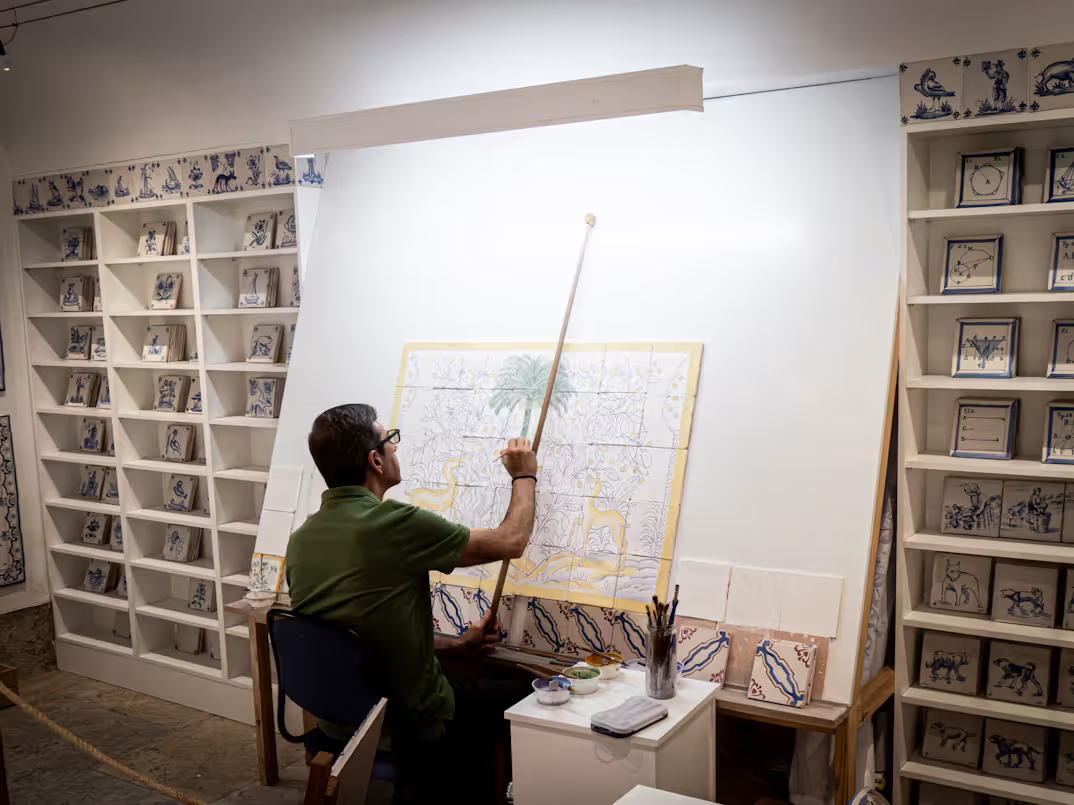
Visitors often remember an exhibition through the artworks they encountered.
A remarkable painting.
A thought-provoking sculpture.
A quiet gallery filled with photography.
An installation that transformed the way a familiar space was experienced.
Yet behind every memorable exhibition stands another creative figure whose work is rarely visible.
The curator.
Curators shape the experience long before the first visitor enters the gallery. They research artists, examine collections, develop themes, select artworks, collaborate with conservators, coordinate loans, design gallery layouts, write exhibition texts, and work closely with architects, designers, educators, and installation teams.
Their task is not simply to gather important works in one place.
It is to create meaningful conversations between them.
A successful exhibition encourages visitors to move naturally from one artwork to the next, gradually discovering connections that may not have been obvious when each object was viewed individually. Paintings speak to sculptures. Historical works illuminate contemporary ideas. Photography introduces new perspectives within familiar themes.
For collectors, understanding the curatorial process offers valuable insight into how artworks communicate beyond individual ownership. It reveals that context can profoundly influence interpretation, encouraging slower observation and deeper appreciation.
Great exhibitions therefore function much like carefully written books.
Every gallery becomes a chapter.
Every artwork contributes to the narrative.
Every visitor completes the story through personal experience.
Every Exhibition Begins with a Question
Curators rarely begin with a list of artworks.
Instead, they begin with questions.
How has contemporary sculpture changed over the last fifty years?
What role does light play in modern photography?
How have artists responded to changing cities?
What conversations exist between historical craftsmanship and contemporary design?
These questions provide direction while allowing the exhibition to develop organically through research.
Rather than forcing artworks into predetermined categories, curators search for relationships that naturally emerge.
The strongest exhibitions therefore feel focused without becoming restrictive.
Research Comes Before Selection
Before any artwork is chosen, extensive research takes place.
Curators study artist archives, exhibition catalogues, scholarly publications, museum collections, and conservation records while speaking with artists, collectors, gallery representatives, and fellow researchers.
This process often continues for months or even years.
Many artworks considered during early planning never appear in the final exhibition.
Others become central once unexpected connections emerge.
The goal is never simply to include famous works.
It is to select artworks that contribute meaningfully to the exhibition's central idea.
Creating Conversations Between Artworks
An individual artwork tells one story.
Several thoughtfully arranged artworks can tell many.
Curators carefully consider how visitors will experience relationships between paintings, sculptures, photographs, ceramics, and design objects throughout the exhibition.
Sometimes similarities create harmony.
At other times, contrasts generate entirely new ways of thinking.
A minimalist sculpture beside an expressive painting.
Historic craftsmanship displayed alongside contemporary design.
Black-and-white photography leading into colourful installations.
These visual conversations encourage visitors to make discoveries independently rather than simply reading information from wall labels.
Designing the Visitor Journey
Once the artworks have been selected, curators begin shaping how visitors will experience the exhibition.
The order of the galleries is rarely accidental.
An opening room often introduces the exhibition's central idea through a small number of carefully chosen works. As visitors continue, each gallery gradually expands the conversation, adding complexity while maintaining a clear narrative.
Transitions between spaces are equally important.
A dramatic installation may be followed by a quieter room that encourages reflection. Large-scale sculptures might introduce themes later explored through photography or works on paper. Every movement through the exhibition becomes part of the storytelling process.
Rather than presenting information all at once, thoughtful exhibition design allows understanding to develop naturally through observation.
The Importance of Space and Light
Curators collaborate closely with exhibition designers and lighting specialists to determine how every artwork should be presented.
Space influences perception.
A monumental sculpture requires room to be viewed from multiple angles.
Small drawings encourage intimate viewing.
Photography often benefits from quieter environments where subtle tonal details can be appreciated without distraction.
Lighting also transforms the experience.
Natural-looking illumination may enhance paintings, while carefully directed spotlights emphasise texture, form, and material in sculpture and design objects. Sensitive works on paper are displayed under lower light levels to support long-term preservation.
These decisions are not simply technical.
They shape the emotional atmosphere of the exhibition and guide visitors' attention throughout the galleries.
Writing for Curiosity
Wall texts and exhibition labels are among the curator's most challenging responsibilities.
Visitors arrive with different levels of knowledge.
Some may be encountering an artist for the first time, while others have studied the subject for years.
The most effective interpretation therefore avoids overwhelming audiences with information.
Instead, it provides enough context to encourage closer observation.
Rather than explaining every possible meaning, well-written labels introduce key ideas, historical background, and artistic intentions while leaving space for personal interpretation.
Many visitors remember an exhibition not because they memorised facts, but because they left asking new questions.
That sense of curiosity is often the greatest success of thoughtful curatorial writing.
Collaboration Behind the Scenes
Although curators provide creative direction, exhibitions are always collaborative projects.
Registrars coordinate loans and transportation.
Conservators examine artworks before installation.
Exhibition designers develop gallery layouts.
Art handlers carefully position every object.
Photographers document the installation.
Educators prepare tours and public programmes.
Graphic designers create exhibition catalogues and interpretive materials.
Every department contributes specialist knowledge while working toward a shared goal.
By opening day, the exhibition represents the combined effort of dozens of professionals whose work remains largely invisible to visitors.
This collaboration allows artworks to be experienced safely, thoughtfully, and with appropriate historical context.
Why Great Exhibitions Stay With Us
The most memorable exhibitions continue influencing visitors long after they leave the museum.
A carefully chosen sequence of artworks may reshape how someone understands an artist.
An unexpected comparison can introduce entirely new perspectives.
A single installation may inspire further reading, travel, or collecting.
Great exhibitions achieve more than temporary display.
They encourage lasting curiosity.
Collectors frequently return to catalogues, revisit artists, and continue exploring ideas first encountered within exhibition galleries.
In this way, the exhibition becomes the beginning of a conversation rather than its conclusion.
Collector's Insight
Great curators do not tell visitors what to think. They create the conditions that encourage people to discover meaningful connections for themselves.
Conclusion
Every successful exhibition is the result of careful research, thoughtful planning, and meaningful collaboration. Long before visitors encounter the finished galleries, curators have already shaped the experience through months of study, artwork selection, exhibition design, interpretation, and coordination with specialists across many disciplines. Their work transforms individual objects into connected stories that encourage curiosity and reflection.
For collectors, understanding the curatorial process offers a valuable new perspective on viewing art. It reveals how context influences interpretation, how thoughtful sequencing strengthens visual narratives, and how relationships between artworks often become just as important as the works themselves. Every exhibition becomes an opportunity not only to admire individual masterpieces but also to appreciate the broader conversations they create together.
Ultimately, great exhibitions remind us that art is most powerful when experienced through dialogue. By carefully bringing together artists, ideas, materials, and audiences, curators create spaces where discovery continues long after the gallery doors close.
Discover thoughtful editorial features exploring exhibitions, museums, collecting, and the creative professionals shaping today's cultural landscape through ModernPress.
Related Story
The World's 10 Greatest Art Museums Every Collector Should Visit

Isabelle Fontaine
Culture writer exploring museums, exhibitions, artistic movements, and the stories behind influential works of art. Her reporting connects art with everyday cultural life.