
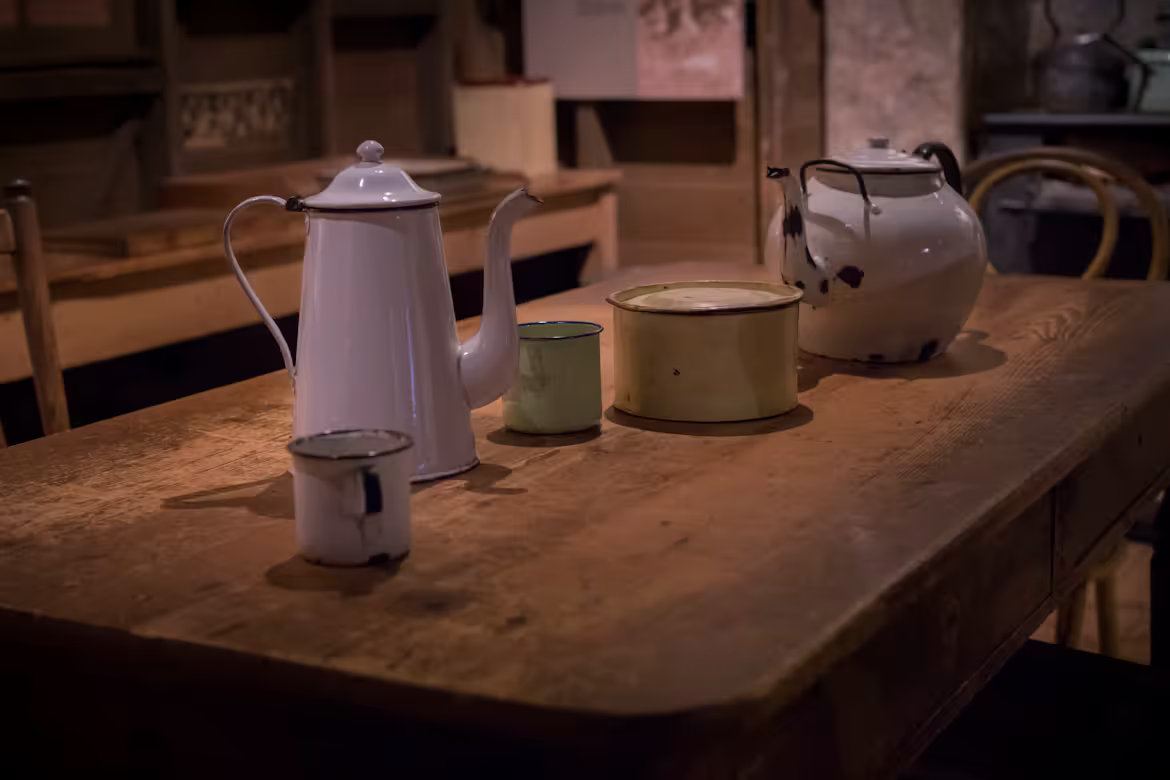
Walk into the home of a passionate collector and you quickly realise that the most memorable objects are not always the rarest or the most valuable. A weathered ceramic vessel displayed on a bookshelf, a framed photograph inherited from a grandparent, a handcrafted chair purchased during a memorable journey, or a small sculpture discovered in a local gallery may hold greater significance than works commanding far higher prices.
The reason is simple.
Collectors rarely form lasting relationships with objects because of market value alone. They collect because objects preserve stories.
Every carefully chosen piece carries traces of the people who made it, the places it has travelled, the ideas it represents, and the moments in life when it became meaningful. Over time, collections evolve into visual biographies, revealing not only artistic interests but also personal experiences, cultural curiosity, and intellectual growth.
This storytelling quality distinguishes collecting from accumulation. A house filled with expensive objects may impress visitors, yet without thoughtful connections those objects remain isolated possessions. A meaningful collection, by contrast, reveals a coherent narrative. Every acquisition contributes another chapter, gradually reflecting the collector's evolving perspective on art, design, history, and culture.
Museums recognise this principle as well. Their exhibitions rarely celebrate objects in isolation. Instead, they use collections to tell stories about civilisations, artistic movements, craftsmanship, innovation, and human creativity. Private collectors often pursue the same goal on a more personal scale, consciously or unconsciously creating narratives that future generations can continue exploring.
Understanding why people collect stories rather than simply objects reveals one of the deepest motivations behind collecting itself. It is not merely about preserving things—it is about preserving meaning.
Collections Reflect Personal Identity
Ask ten collectors why they began collecting and you will likely hear ten different answers.
Some describe childhood visits to museums. Others remember discovering a painting that changed the way they looked at art. Many speak of travel, family traditions, or encounters with artists whose work left a lasting impression.
These experiences gradually shape collecting interests.
Rather than following market trends, collectors begin recognising recurring themes that genuinely resonate with them. One person may become fascinated by contemporary ceramics, another by photography documenting changing cities, while someone else dedicates decades to handcrafted furniture or works on paper.
Viewed together, these choices reveal far more than aesthetic preference.
They reflect personal identity.
A collection becomes an expression of curiosity, memory, and values—one that continues evolving throughout the collector's life.
Objects Carry Human Stories
Every object has lived a life before entering a collection.
An artwork begins in an artist's studio. A ceramic vessel passes through the kiln. A photograph records a particular moment in time. A handcrafted table reflects weeks or months of careful craftsmanship.
As these objects move through galleries, exhibitions, collections, and sometimes generations of ownership, they accumulate additional layers of history.
Collectors often find this journey just as compelling as the object itself.
Understanding where something was created, who cared for it, how it has been exhibited, and why it continues to be appreciated transforms ownership into something much richer than possession.
Objects become storytellers.
Collecting Creates Connections
One of the unexpected rewards of collecting is the way it encourages relationships.
Collectors visit artist studios, attend exhibitions, speak with gallery directors, meet craftspeople, read catalogues, and exchange ideas with fellow enthusiasts. Every acquisition becomes part of a wider network of conversations that extends beyond the object itself.
Over time, these experiences often become inseparable from the collection.
Years later, collectors may remember the discussion that led to an acquisition as vividly as the object they acquired.
In this way, collections preserve not only artworks but also human encounters.
The Emotional Value of Collecting
While rarity and craftsmanship often attract attention, emotional connection is what encourages collectors to live with an object for years, sometimes even decades.
A painting may remind someone of the first exhibition that sparked a lifelong interest in contemporary art. A handcrafted ceramic vessel may recall a memorable conversation with its maker. A photograph acquired during travel can preserve the atmosphere of a place long after the journey has ended.
These personal associations cannot be measured by market value, yet they often become the most important reason an object remains within a collection.
Collectors frequently discover that the pieces they treasure most are not necessarily those receiving the greatest public attention. Instead, they are the objects that continue to evoke memories, curiosity, and reflection each time they are encountered.
This emotional dimension gives collections a depth that extends beyond aesthetics or investment.
Collections Grow Across Generations
Some collections remain the work of a single individual, while others gradually become shared family traditions.
Parents introduce children to museums, galleries, and artists. Grandparents pass down carefully chosen objects together with the stories that explain why they mattered. New generations contribute their own interests, allowing collections to evolve while preserving connections with the past.
In many families, these conversations become just as valuable as the objects themselves.
A handwritten note describing where a painting was acquired, an old exhibition catalogue tucked inside a bookcase, or photographs documenting earlier displays all add layers of meaning that future generations continue to appreciate.
The collection becomes a living archive—not only of art and design, but of shared experiences and personal history.
Rather than remaining static, it grows alongside the people who care for it.
Preserving Memories Through Objects
Human memory is often closely connected to physical objects.
A sculpture displayed in the same room for many years gradually becomes associated with family celebrations, everyday conversations, and quiet moments of reflection. A collection of photographs may document changing cities while also recording the collector's own journey through life.
These associations explain why collectors frequently describe their collections as companions rather than possessions.
Objects provide continuity during periods of change. Homes may evolve, interests may expand, and generations may succeed one another, yet familiar artworks continue offering points of reference that connect different chapters of life.
Museums recognise this relationship as well.
Every historical object preserved within a collection serves as tangible evidence of human experience, allowing future audiences to understand cultures, traditions, and creative achievements through physical objects that have survived the passage of time.
Private collections often fulfil a similar role on a more intimate scale.
Stories Outlast Prices
Art markets rise and fall. Design trends change. Certain artists receive greater attention while others are rediscovered years later.
Stories, however, possess remarkable resilience.
Collectors rarely remember the exact market conditions surrounding every acquisition, but they often remember the circumstances that made an object meaningful. They recall the gallery where they first encountered an artwork, the conversation with an artist, the exhibition that inspired them, or the family member who introduced them to collecting.
These memories continue enriching collections regardless of changing market values.
This perspective encourages healthier collecting habits.
Rather than pursuing objects solely because they appear fashionable or financially promising, collectors focus on acquiring works that genuinely contribute to their own understanding of art, culture, and history.
Over time, these personal narratives become one of the collection's greatest strengths.
A Collection Is Never Truly Finished
Many experienced collectors resist describing their collections as complete.
Every museum acquires new works. Every exhibition introduces unfamiliar artists. Every journey presents opportunities for discovery.
Collecting therefore remains an ongoing conversation rather than a destination.
Sometimes a collection grows through new acquisitions. At other times it develops through deeper research into objects already owned. Reading exhibition catalogues, revisiting museums, meeting artists, or simply observing familiar works with fresh perspective all contribute to this continuing evolution.
The collection changes because the collector changes.
New experiences encourage new questions, and those questions often lead to different ways of seeing the objects already present.
This openness to continued learning is one of the defining characteristics of thoughtful collecting.
Collector's Insight
The objects that remain meaningful for a lifetime are rarely those chosen in haste. They are the ones that continue revealing new stories every time you return to them.
Conclusion
People collect objects because they preserve far more than physical form. They capture memories, celebrate craftsmanship, document cultural history, and reflect the personal journeys of those who choose to live with them. Every thoughtfully acquired artwork, photograph, ceramic vessel, or design object becomes part of a larger narrative that continues unfolding over time.
For collectors, understanding this storytelling dimension transforms collecting from a pursuit of ownership into an act of preservation. Objects are valued not only for their rarity or beauty, but for the experiences, conversations, and discoveries they continue to inspire. The strongest collections therefore reveal as much about the people who assembled them as they do about the artists who created them.
Long after prices have been forgotten and trends have changed, the stories carried by meaningful collections continue to connect generations, encourage curiosity, and deepen appreciation for the enduring relationship between people and the objects they choose to preserve.
Discover thoughtful editorial features exploring collecting, craftsmanship, museums, private collections, and the cultural stories behind exceptional objects.
Related Story
Understanding Contemporary Art: A Beginner's Guide

Sophia Harrington
Luxury collectibles writer focusing on private collections, rare objects, investment-grade collectibles, and the cultural significance of ownership.