
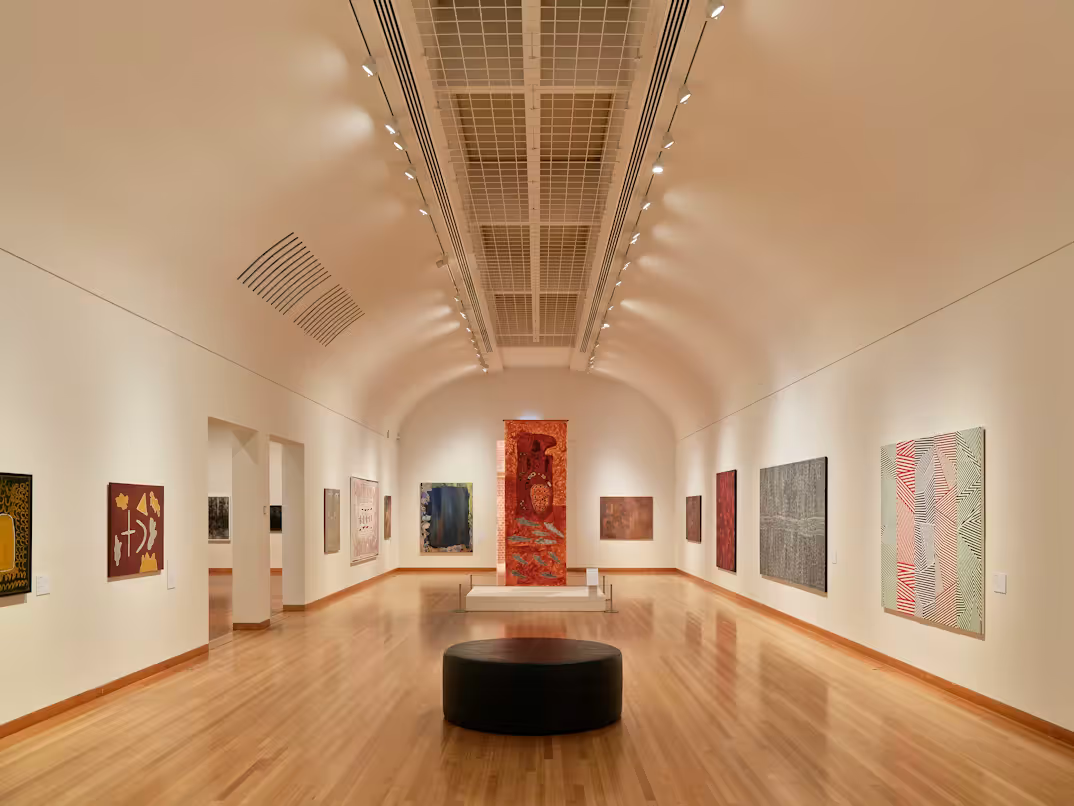
Choose a clean, modern gallery interior featuring large-scale contemporary artworks, neutral architecture, and natural lighting.
For many first-time museum visitors, contemporary art can feel unfamiliar. A canvas covered in bold colours, an installation made from everyday objects, or a room filled with light and sound often raises the same question: Is this really art?
Unlike classical painting or Renaissance sculpture, contemporary art does not always seek to impress through technical realism or traditional craftsmanship. Instead, it often asks viewers to think, question, and participate. It explores identity, technology, politics, memory, the environment, culture, and countless other aspects of modern life.
This difference can make contemporary art feel intimidating, particularly for those who are more familiar with historical masterpieces. Yet once its context and intentions become clearer, contemporary art becomes remarkably accessible. Every artwork represents a conversation between the artist and society, inviting viewers to interpret ideas rather than search for a single correct meaning.
Understanding contemporary art does not require formal training or an academic background. It begins with curiosity, careful observation, and the willingness to look beyond first impressions. Like learning a new language, appreciation develops gradually through exposure, experience, and reflection.
Today, contemporary art shapes museums, galleries, biennales, public spaces, and private collections around the world. Collectors increasingly seek works that capture the ideas and concerns of our own era, making contemporary art one of the most dynamic areas of today's cultural landscape.
What Is Contemporary Art?
Contemporary art generally refers to works created by living artists or those produced in the late twentieth and twenty-first centuries. Rather than being defined by a single style, it encompasses a wide variety of approaches, media, and perspectives.
Paintings, sculpture, photography, installation, performance, digital media, video, sound, textiles, ceramics, and conceptual works all exist comfortably within contemporary practice. This diversity reflects the complexity of modern society itself.
Unlike earlier artistic periods that shared common visual characteristics, contemporary art is united more by its engagement with current ideas than by a particular aesthetic. Artists respond to globalization, technological change, environmental concerns, migration, identity, and cultural exchange, creating works that encourage viewers to reflect on the world around them.
For newcomers, this broad definition can initially feel overwhelming. However, it is precisely this openness that makes contemporary art so engaging. Every exhibition offers new perspectives, encouraging visitors to question assumptions and discover unexpected connections between artists working in different cultures and disciplines.
From Modern to Contemporary
One of the most common misconceptions is that modern art and contemporary art are the same. While the two are closely connected, they represent different periods in art history.
Modern art generally refers to artistic movements that emerged from the late nineteenth century through much of the twentieth century. Impressionism, Cubism, Surrealism, and Abstract Expressionism all belong within this broader history of modernism.
Contemporary art builds upon these foundations while embracing an even wider range of ideas and materials. Artists today are free to combine traditional painting with digital technology, sculpture with performance, or photography with installation. Rather than following established rules, they often create entirely new forms of expression.
This freedom reflects a broader shift in artistic practice. Contemporary artists are less concerned with fitting into defined movements and more interested in exploring questions that matter within today's rapidly changing world.
Why Ideas Matter More Than Appearance
One of the defining characteristics of contemporary art is its emphasis on ideas.
While beauty and craftsmanship remain important for many artists, the concept behind a work often plays an equally significant role. An installation made from recycled materials, for example, may invite viewers to consider environmental sustainability rather than simply admire its visual qualities.
This conceptual approach explains why contemporary artworks sometimes appear deceptively simple. Their value often lies not in technical complexity alone but in the questions they encourage audiences to ask.
For beginners, this shift can be liberating. Rather than wondering whether an artwork is "good" or "bad," it becomes more useful to ask:
- What is the artist trying to communicate?
- Why were these materials chosen?
- How does the artwork respond to contemporary society?
- What emotions or ideas does it evoke?
These questions transform viewing into an active conversation rather than a search for definitive answers.
How Contemporary Artists Work with Materials
One of the most exciting aspects of contemporary art is the freedom artists have in choosing materials. While oil paint, bronze, marble, and canvas remain important, today's artists often incorporate photography, textiles, ceramics, found objects, reclaimed wood, metal, digital projections, sound, video, and even artificial intelligence into their creative practice.
This diversity reflects the changing nature of modern life. An artist exploring environmental issues may work with recycled materials, while another examining technology might create immersive digital installations. The choice of material becomes part of the artwork's message rather than simply a medium for displaying technical skill.
For viewers, understanding the relationship between concept and material often reveals the deeper intention behind a work. Asking "Why did the artist choose these materials?" is frequently more rewarding than asking whether the artwork looks realistic.
Installation Art: Experiencing Rather Than Observing
Many newcomers encounter installation art and wonder why it differs so dramatically from traditional painting or sculpture.
Unlike artworks displayed on a wall or pedestal, installations transform an entire space into part of the artistic experience. Visitors move through the work, becoming active participants rather than passive observers.
Light, sound, architecture, movement, scent, and scale can all contribute to the final experience. The artwork is no longer a single object—it becomes an environment.
This approach encourages slower engagement. Rather than spending only a few seconds looking at an artwork, visitors are invited to explore, reflect, and experience the space from multiple perspectives.
Museums and biennales frequently feature installation art because it creates memorable experiences while demonstrating how contemporary artists continue expanding the boundaries of creative expression.
The Role of Museums and Galleries
Museums play an essential role in helping audiences understand contemporary art.
Thoughtfully curated exhibitions place works within historical, cultural, and social contexts, allowing visitors to discover relationships between artists, movements, and ideas. Exhibition texts, educational programmes, guided tours, and public discussions further enrich the viewing experience.
Commercial galleries serve a complementary purpose by introducing emerging and established artists to collectors. They often provide opportunities to meet artists, attend exhibition openings, and engage directly with contemporary creative practice.
Rather than viewing museums and galleries as separate worlds, many collectors regularly visit both. Museums provide historical perspective and scholarship, while galleries offer insight into today's evolving artistic landscape.
Building Confidence as a New Collector
Many people assume collecting contemporary art requires significant wealth or expert knowledge. In reality, most collections begin with curiosity rather than investment.
The strongest collections often reflect personal interests instead of market trends. Some collectors focus on photography, others on ceramics, sculpture, works on paper, or emerging painters. There is no single correct approach.
Before making a purchase, consider the following:
- Visit museums and galleries regularly.
- Learn about the artist's background and practice.
- Understand the artwork's materials and conservation needs.
- Request documentation and provenance where appropriate.
- Buy works that continue to resonate over time rather than following short-lived trends.
Thoughtful collecting develops gradually through observation, research, and meaningful engagement with artists and institutions.
Five Practical Tips for Viewing Contemporary Art
Approaching contemporary art becomes easier with experience. These habits can help first-time visitors feel more confident.
Spend More Time with Fewer Works
Rather than rushing through an exhibition, spend several minutes with a single artwork. Initial impressions often change through careful observation.
Read the Exhibition Labels
Curatorial texts provide valuable context without dictating how an artwork should be interpreted.
Observe Before Forming an Opinion
Take time to notice colour, scale, materials, composition, and atmosphere before deciding whether you like the work.
Accept Multiple Interpretations
Different viewers may discover entirely different meanings within the same artwork. This openness is one of contemporary art's greatest strengths.
Return to Museums Frequently
Art appreciation develops over time. Each visit expands visual knowledge and strengthens confidence.
Conclusion
Contemporary art reflects the questions, challenges, and aspirations of the world we inhabit today. Rather than following fixed rules or traditional definitions of beauty, it encourages curiosity, dialogue, experimentation, and personal interpretation.
For beginners, the most valuable approach is not to search for perfect answers but to remain open to new perspectives. Every exhibition, gallery visit, and conversation adds another layer of understanding, transforming uncertainty into genuine appreciation.
Whether viewed in museums, galleries, public spaces, or private collections, contemporary art reminds us that creativity continues to evolve alongside society itself. It is this constant evolution that makes it one of the most engaging and influential forms of artistic expression in the modern world.
Collector's Insight
Don't worry about understanding every artwork immediately. The goal is not to find a single correct interpretation, but to develop your own thoughtful response through observation, research, and repeated exposure.
Whether you're discovering contemporary art for the first time or expanding an existing collection, explore more editorial features, artist profiles, exhibition coverage, and collecting guides from around the world.
Related Story

Isabelle Fontaine
Culture writer exploring museums, exhibitions, artistic movements, and the stories behind influential works of art. Her reporting connects art with everyday cultural life.