
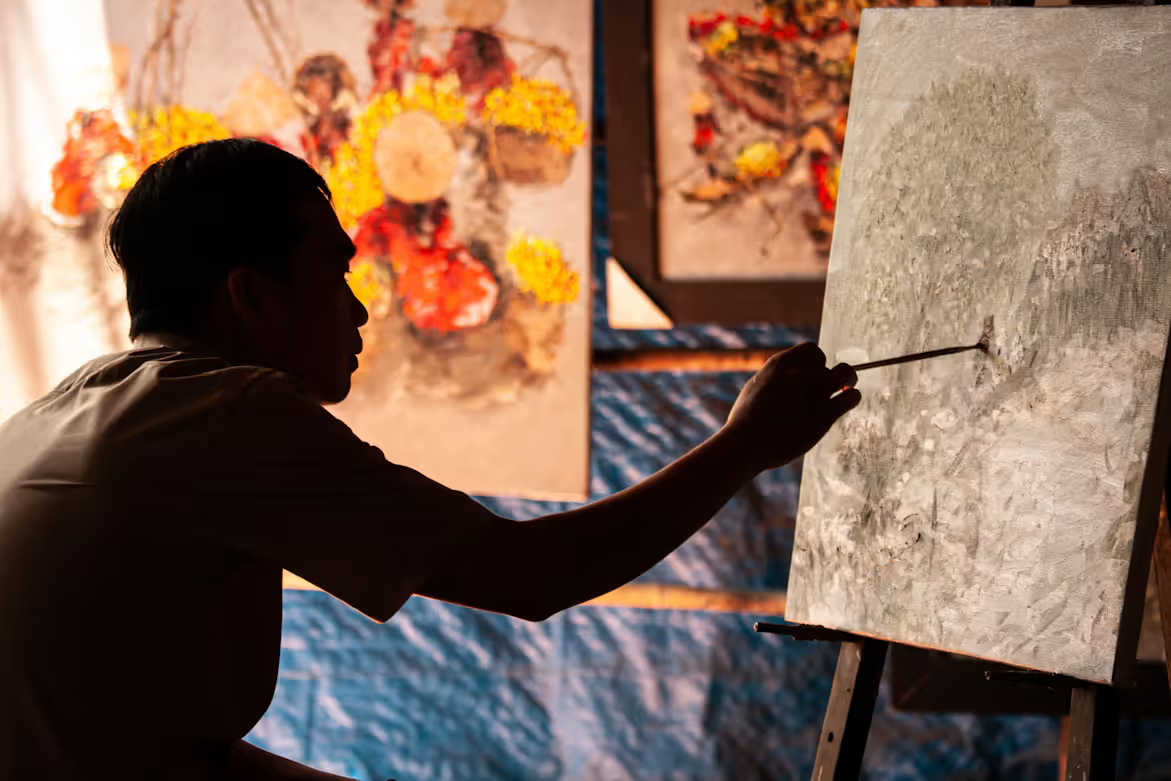
Ask someone to describe the paintings of Claude Monet, the portraits of Frida Kahlo, or the geometric compositions of Piet Mondrian, and they will often recognise the artist before hearing the name. This immediate recognition is not accidental. It is the result of what is commonly known as an artist's signature style—a distinctive visual language that evolves through years of creative exploration rather than conscious branding.
For collectors, recognising an artist's signature style is more than an enjoyable exercise in observation. It provides insight into the consistency of an artist's practice, the evolution of their ideas, and the originality that distinguishes meaningful work from imitation. A signature style reflects not only technical ability but also the artist's way of seeing and interpreting the world.
Contrary to popular belief, a signature style does not emerge from repeating the same composition endlessly. The strongest artistic identities remain recognisable while continuing to evolve. Artists refine techniques, experiment with materials, respond to changing cultural influences, and revisit recurring themes without losing the qualities that make their work uniquely their own.
Understanding how these visual identities develop helps collectors look beyond surface aesthetics. Rather than asking whether a painting resembles previous works, they begin to recognise deeper patterns in composition, colour, subject matter, symbolism, and conceptual thinking.
Whether viewing contemporary paintings, sculpture, photography, or installation art, recognising an artist's individual voice is one of the most rewarding aspects of collecting and appreciating art.
A Signature Style Is Built, Not Invented
Many people imagine that artists simply decide upon a distinctive style early in their careers. In reality, the opposite is usually true.
Most artists spend years experimenting with different techniques, influences, and materials before discovering the visual language that feels most authentic to their practice. Early works often reveal traces of admired artists, academic training, or technical exploration before gradually giving way to greater confidence and originality.
This period of experimentation is essential. It allows artists to understand what genuinely interests them rather than producing work that follows current trends or external expectations.
As ideas mature, recurring characteristics naturally begin to appear. Certain colour palettes, compositional approaches, textures, subjects, or conceptual themes become increasingly consistent, helping viewers recognise the artist's work even before reading the accompanying label.
For collectors, observing this progression offers valuable insight into an artist's creative journey. Early experimentation is not a sign of uncertainty but an important stage in developing a lasting artistic identity.
Beyond Technique: The Role of Personal Vision
Technical skill alone does not create a signature style.
Two painters may possess equal mastery of colour, composition, and brushwork, yet produce entirely different bodies of work because their perspectives, interests, and experiences differ.
An artist's signature style is shaped by countless influences, including cultural background, personal history, travel, literature, music, architecture, philosophy, and everyday observation. These experiences gradually become embedded within the creative process, giving each artwork a distinctive character that extends beyond technique.
This personal vision often proves more enduring than any individual aesthetic trend. While materials and methods may change throughout an artist's career, the underlying way of interpreting the world frequently remains recognisable.
Collectors who learn to identify this deeper consistency develop a greater appreciation for artistic originality and long-term creative development.
Colour, Composition, and Visual Language
When people describe an artist's signature style, they often focus first on visible characteristics such as colour, brushwork, or composition. These elements certainly contribute to recognition, but their significance extends beyond appearance alone.
Some artists consistently work with muted, earthy tones that create quiet, reflective atmospheres. Others embrace vivid colour palettes that energise a composition and immediately capture attention. Over time, these choices become closely associated with the artist's creative identity.
Composition plays an equally important role. The placement of figures, the use of negative space, the balance between structure and spontaneity, and the relationship between objects within an artwork all contribute to a recognisable visual rhythm.
For collectors, paying attention to these recurring decisions reveals patterns that extend across an artist's body of work. Rather than comparing one painting in isolation, it becomes possible to appreciate how individual pieces contribute to a broader creative language.
Recurring Themes Tell a Deeper Story
A signature style is not defined only by how an artist creates—it is also shaped by what they choose to explore.
Many artists return repeatedly to subjects that hold lasting personal significance. Some investigate memory, identity, or family history. Others focus on landscapes, architecture, abstraction, environmental concerns, or the relationship between people and technology.
These recurring themes create continuity throughout an artist's career, even when techniques or materials evolve. A painter who later experiments with sculpture or photography may continue exploring the same ideas from a different perspective.
Collectors often discover that these thematic connections become more apparent after viewing multiple exhibitions or studying an artist's work over several years. Understanding these recurring interests provides a richer appreciation of the artist's long-term vision.
Evolution Without Losing Identity
One of the strongest indicators of artistic maturity is the ability to evolve without becoming unrecognisable.
Successful artists rarely spend decades repeating identical compositions simply because they have become commercially successful. Instead, they allow their work to grow naturally through new research, travel, collaboration, and experimentation.
This evolution keeps an artist's practice intellectually engaging while preserving the qualities that originally defined it.
Collectors sometimes worry when an artist begins exploring new techniques or subjects. Yet thoughtful evolution is often a sign of confidence rather than inconsistency. Artists who continue asking new questions tend to produce bodies of work that remain relevant throughout changing cultural and artistic landscapes.
The challenge lies in balancing innovation with authenticity—a balance that many of history's most respected artists achieved throughout their careers.
How Collectors Recognise Authentic Artistic Voices
Recognising a genuine artistic voice requires patience rather than quick judgement.
Instead of evaluating a single artwork, experienced collectors often examine an artist's wider body of work. Looking across multiple exhibitions, catalogues, and periods reveals whether recurring ideas emerge naturally or whether stylistic changes appear driven primarily by market demand.
Some questions collectors may ask include:
- Does the artist demonstrate consistent curiosity and research?
- Are recurring themes visible throughout different bodies of work?
- Does experimentation strengthen rather than dilute the practice?
- Can the work be recognised without relying on a signature or label?
- Does each new series contribute meaningfully to the artist's ongoing development?
These observations help collectors appreciate authenticity beyond immediate visual appeal.
Common Misconceptions About Signature Styles
Several misconceptions continue to shape discussions around artistic identity.
"A signature style never changes."
In reality, artistic styles often evolve throughout an artist's career. Growth and experimentation are natural parts of creative development.
"Recognisable means repetitive."
Consistency does not require repetition. The strongest artists remain recognisable while continuing to explore new ideas and techniques.
"Technical skill alone creates originality."
Technical ability is important, but originality comes from personal vision, thoughtful research, and individual interpretation.
"Every successful artist develops a signature style immediately."
Most artists spend years discovering the visual language that genuinely reflects their creative interests.
Understanding these realities encourages a more thoughtful appreciation of artistic practice while reducing the temptation to judge works based solely on familiarity.
Collector's Insight
Don't ask whether an artwork resembles the artist's previous work. Ask whether it continues the conversation the artist has been developing throughout their career.
Conclusion
An artist's signature style is not a formula repeated endlessly but a visual language refined through years of observation, experimentation, and personal growth. It reflects the artist's way of thinking as much as their way of making, connecting individual works through shared ideas rather than identical appearances.
For collectors, recognising this distinction transforms the experience of viewing art. Attention shifts from isolated techniques to broader creative journeys, revealing how artists develop authentic voices that remain both consistent and open to evolution.
The most memorable artists are rarely those who repeat themselves most successfully. They are those who continue exploring new possibilities while remaining unmistakably true to their own perspective. Learning to recognise that balance deepens appreciation not only for individual artworks but for the lifelong creative process behind them.
Continue discovering the stories behind today's artists through in-depth editorial features, collecting guides, exhibition coverage, and thoughtful perspectives from the global art world.
Related Story
How Emerging Artists Build Successful Careers

Genevieve Laurent
Contemporary art journalist focused on emerging artists, gallery exhibitions, and the evolving global art scene. She regularly covers major art fairs and cultural institutions.