
Collectors often discover artists only after they have achieved international recognition. Their works appear in museums, headline major exhibitions, or achieve impressive auction results, creating the impression that success arrived suddenly. In reality, most artistic careers develop gradually through years of experimentation, persistence, and continuous learning.
The path from an emerging artist to an established name is rarely straightforward. It is shaped by countless hours in the studio, participation in local exhibitions, conversations with curators, relationships with galleries, residency programmes, critical reviews, and the support of early collectors who recognised potential long before widespread recognition arrived.
For collectors, understanding this journey provides valuable perspective. Rather than evaluating an artwork solely through current market attention, collectors begin to appreciate the broader ecosystem that supports artistic development. They learn to recognise consistency, originality, and thoughtful practice—qualities that often prove more significant than short-term popularity.
Emerging artists also play an essential role in keeping the art world vibrant. They introduce new perspectives, experiment with materials, challenge established conventions, and respond directly to contemporary social and cultural issues. Their work reflects the present moment while contributing to the future history of art.
Supporting emerging artists therefore becomes more than acquiring artwork. It represents an investment in creativity itself, helping artists continue developing ambitious ideas while enriching the cultural landscape.
Every Artist Begins with a Personal Practice
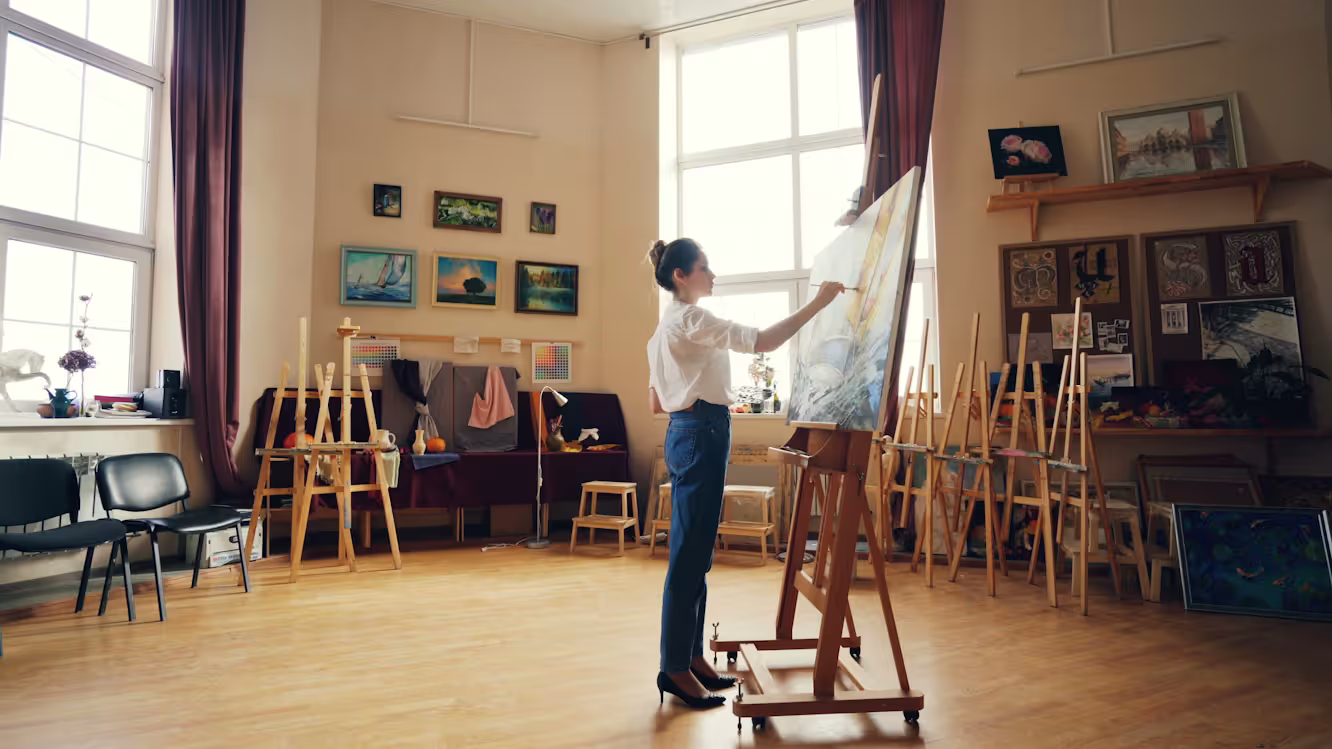
Long before gallery representation or museum exhibitions, every artist develops a personal creative practice.
This stage is often invisible to the public. It involves experimenting with materials, refining techniques, studying historical influences, and discovering an individual visual language. Many artists spend years producing work, revising ideas, and exploring different directions before presenting their practice professionally.
Creative growth rarely follows a predictable path. Some artists remain committed to a single medium throughout their careers, while others continuously experiment with painting, sculpture, photography, installation, textiles, ceramics, or digital technologies. What unites successful artists is not stylistic consistency alone but a sustained commitment to exploration.
For collectors, recognising the importance of this developmental period encourages patience when evaluating emerging artists. Early works may differ significantly from later pieces, yet they often reveal the foundations of an artist's evolving vision.
The Importance of Exhibitions
Public exhibitions represent significant milestones in an artist's career.
They provide opportunities to share new work, receive professional feedback, and engage directly with audiences. Whether organised by independent art spaces, commercial galleries, museums, universities, or cultural institutions, exhibitions introduce artists to collectors, curators, critics, and fellow creatives.
Group exhibitions are often the first step. By exhibiting alongside other artists, emerging practitioners gain visibility while building professional networks within the wider art community.
As careers develop, solo exhibitions allow artists to present a more complete body of work, demonstrating the depth and consistency of their practice. These exhibitions frequently become defining moments, shaping how artists are understood by both the public and the market.
For collectors, exhibition history provides valuable context. Regular participation in thoughtfully curated exhibitions often reflects sustained professional development rather than short-term visibility.
Building Relationships with Galleries
Commercial galleries play an important role in supporting many emerging artists.
Beyond exhibiting artwork, galleries help artists develop their careers through strategic planning, collector introductions, marketing, fair participation, and long-term representation. Strong gallery relationships allow artists to focus more fully on creative practice while benefiting from professional guidance and wider exposure.
However, representation is rarely the beginning of success—it is usually the result of years of consistent work and professional development.
Likewise, successful gallery relationships are built on mutual trust. Galleries invest significant time and resources in promoting artists, while artists rely on galleries to present their work thoughtfully and ethically.
For collectors, following respected galleries provides an excellent opportunity to discover promising artists before they become widely recognised.
The Role of Artist Residencies
For many emerging artists, residencies provide an opportunity to step away from everyday responsibilities and focus entirely on creative development. Hosted by cultural institutions, foundations, universities, and independent organizations, these programmes offer dedicated studio space, mentorship, and time for experimentation.
Residencies are rarely viewed as destinations in themselves. Instead, they become periods of exploration where artists refine ideas, test new materials, and engage with other creative professionals from different disciplines and cultures.
Many artists describe these experiences as pivotal moments in their careers. Exposure to new environments often influences both subject matter and technique, while conversations with fellow residents encourage fresh perspectives that continue long after the programme has ended.
For collectors, residency participation can indicate an artist's commitment to professional growth. It reflects a willingness to challenge established routines and engage with broader artistic communities.
Mentorship and Professional Networks
Artistic careers rarely develop in isolation.
Throughout history, experienced artists, curators, educators, and gallery directors have played important roles in supporting younger practitioners. Constructive feedback, introductions to professional networks, and collaborative opportunities often help emerging artists navigate the complexities of the contemporary art world.
Mentorship does not shape an artist's creative voice—it strengthens their ability to communicate and sustain it. Guidance on exhibition planning, portfolio development, documentation, pricing, and professional practice allows artists to focus more confidently on their work.
Equally important are the relationships artists build with fellow creatives. Studio visits, collaborative projects, and peer critiques create environments where ideas can evolve through open dialogue rather than competition.
Collectors who understand these professional networks often gain a deeper appreciation of how artistic communities contribute to long-term creative development.
The Influence of Critical Reviews
While exhibitions introduce artists to new audiences, thoughtful criticism helps place their work within broader cultural conversations.
Reviews written by respected critics, curators, and art historians encourage discussion around an artist's ideas, influences, and creative methods. Rather than simply praising or criticizing individual works, strong criticism provides context that allows audiences to engage more deeply with an artist's practice.
For emerging artists, even modest critical recognition can become an important milestone. It signals that their work is beginning to contribute meaningfully to contemporary discourse.
Collectors often read exhibition essays and critical reviews not because they determine artistic value, but because they provide additional perspectives that enrich understanding.
Ultimately, criticism should complement personal observation rather than replace it.
Finding an Authentic Artistic Voice
One characteristic shared by many successful artists is consistency of vision.
This does not mean producing identical works throughout an entire career. Instead, it refers to developing a recognizable way of thinking, researching, and creating that remains genuine even as techniques and materials evolve.
Emerging artists often experiment widely before discovering this individual voice. Early works may differ significantly in style, yet recurring themes, interests, and questions gradually begin to emerge.
Collectors frequently respond to artists whose work demonstrates thoughtful development rather than abrupt changes driven by market demand. Authenticity is often visible in the continuity of ideas across multiple bodies of work.
Rather than asking whether an artist has found a signature style, it can be more meaningful to ask whether their work continues to ask compelling questions and evolve with purpose.
How Collectors Can Identify Promising Emerging Artists
There is no formula for predicting which artists will achieve international recognition. However, experienced collectors often look beyond immediate popularity and focus on qualities that suggest long-term commitment.
Some questions worth considering include:
- Does the artist have a consistent body of work?
- Is there evidence of thoughtful research and experimentation?
- Has the artist participated in reputable exhibitions or residency programmes?
- Do galleries, curators, or institutions demonstrate ongoing interest in the practice?
- Does the work continue to evolve while maintaining a clear artistic direction?
Equally important is personal connection. Collectors should never ignore their own response to an artwork simply because an artist is not yet widely known.
Many important collections began with works chosen through curiosity rather than certainty.
Common Misconceptions About Emerging Artists
Several myths continue to shape perceptions of early-career artists.
"Emerging means inexperienced."
Many emerging artists have spent decades developing their practice before receiving broader public recognition.
"Only established artists create valuable work."
Artistic significance cannot be measured solely by market visibility. History repeatedly shows that important artists are often recognised gradually.
"Collectors must predict future success."
Responsible collecting is not about predicting the future. It is about supporting work that demonstrates quality, originality, and personal meaning.
"Recognition happens quickly."
Most artistic careers evolve over many years through continuous learning, exhibitions, collaboration, and persistence.
Understanding these realities encourages more thoughtful collecting while fostering greater appreciation for the creative process itself.
Collector's Insight
The most rewarding collections often include artists who were chosen because their work inspired genuine curiosity—not because the market suggested they would become successful.
Conclusion
Every established artist begins as an emerging artist, navigating years of experimentation, learning, and professional growth before reaching wider recognition. Understanding this journey allows collectors to appreciate artworks not simply as finished objects but as chapters within an evolving creative practice.
Exhibitions, residencies, mentorship, critical engagement, and gallery relationships all contribute to an artist's development, yet none can replace the dedication required to sustain a meaningful body of work. Collectors who take time to learn about these experiences often build stronger, more personal connections with the artists they support.
Rather than searching for certainty, approach emerging artists with openness and curiosity. The most fulfilling collections are rarely built by following trends—they grow through thoughtful observation, informed research, and a genuine appreciation for creativity in its earliest stages.
Discover artist profiles, collecting guides, exhibition features, and thoughtful analysis exploring the people and ideas shaping today's art world.
Related Story

Genevieve Laurent
Contemporary art journalist focused on emerging artists, gallery exhibitions, and the evolving global art scene. She regularly covers major art fairs and cultural institutions.