
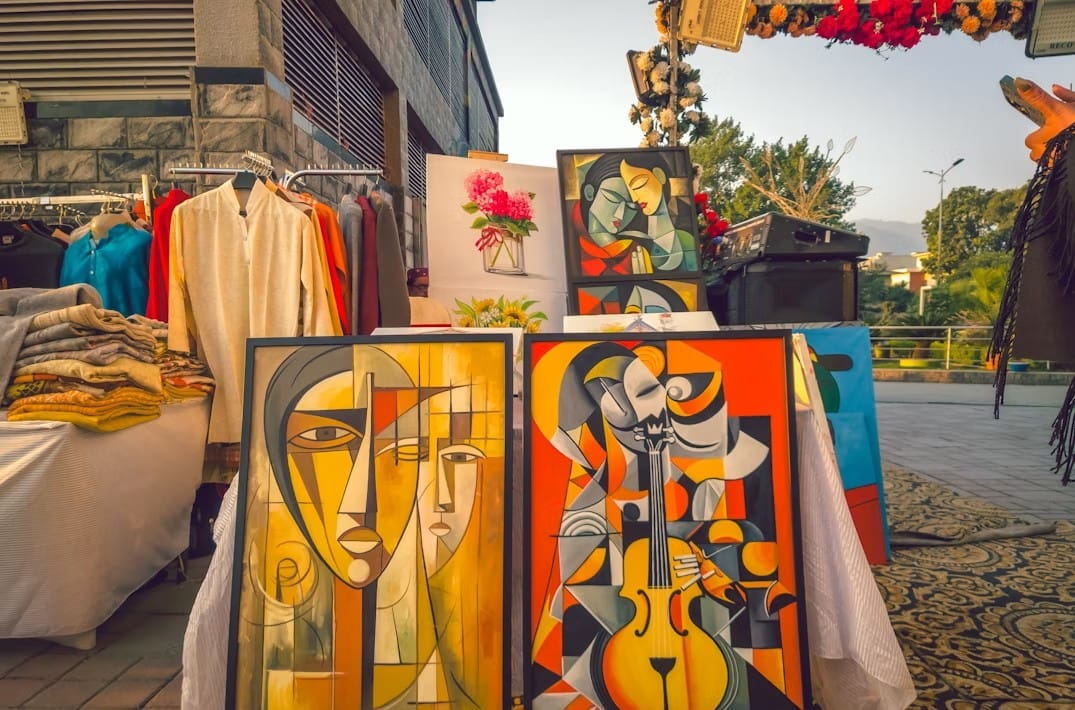
When an auctioneer raises the gavel, the event appears effortless.
Collectors study catalogues, specialists welcome visitors to preview exhibitions, bids are placed within seconds, and remarkable artworks find new homes before the audience moves on to the next lot.
Yet the public sale represents only the final chapter of a much longer process.
Behind every auction lies months of careful preparation involving researchers, cataloguers, conservators, photographers, registrars, logistics specialists, and client advisors. Every artwork must be documented, examined, photographed, transported, and presented before it ever appears in a printed or digital catalogue.
For collectors, understanding this preparation offers valuable insight into how professional auction houses evaluate artworks. It also demonstrates why provenance, condition reporting, accurate cataloguing, and specialist research remain essential to maintaining confidence within the art market.
Whether the sale includes contemporary paintings, sculpture, photography, decorative arts, or rare design objects, every auction begins with careful organisation rather than the excitement of bidding itself.
Looking behind the scenes reveals an extraordinary collaboration between scholarship, logistics, and connoisseurship that often remains invisible to the public.
Consigning an Artwork
Every auction begins with a consignment.
A collector, estate, institution, or private owner contacts an auction house to discuss selling an artwork. Specialists then begin evaluating the object by examining its authenticity, condition, provenance, exhibition history, and market context.
This stage is both practical and scholarly.
Rather than focusing only on potential value, specialists seek to understand the artwork's broader story. Supporting documents, previous publications, certificates, and ownership history all contribute to building an accurate record.
Only after careful assessment does the artwork move forward into the auction preparation process.
Research and Cataloguing
Once accepted for sale, an artwork enters one of the most important stages of preparation.
Cataloguing.
Every catalogue entry requires detailed research.
Specialists verify dimensions, materials, dates, inscriptions, signatures, provenance, exhibition history, and relevant literature. They compare the artwork with previously documented examples while ensuring descriptions remain accurate and informative.
Good cataloguing does more than list facts.
It provides collectors with context.
A well-written catalogue entry helps explain why an artwork matters within an artist's career, artistic movement, or historical period.
For many collectors, these essays remain valuable reference material long after the auction has concluded.
Preparing for the Preview Exhibition
Before bidding begins, most auction houses organise public preview exhibitions where visitors can study artworks in person.
These previews encourage careful observation.
Collectors examine brushwork, texture, framing, materials, scale, and condition far more effectively than photographs alone allow.
Specialists remain available to answer questions, discuss provenance, explain catalogue entries, and provide additional information where appropriate.
For many collectors, preview exhibitions are among the most rewarding aspects of the auction experience because they create opportunities for thoughtful looking without the immediate pressure of bidding.
Professional Photography
Long before an artwork appears in an auction catalogue, it undergoes professional photography.
These images serve a purpose far beyond marketing.
Collectors around the world rely on catalogue photography to study composition, colour, texture, inscriptions, framing, and overall presentation before deciding whether to view a work in person or participate remotely. Photographers therefore aim to produce accurate representations rather than dramatic interpretations.
Lighting is carefully controlled to minimise reflections while revealing surface detail. Multiple images may be created to document signatures, reverse labels, inscriptions, or distinctive craftsmanship that contributes to an artwork's history.
Increasingly, digital catalogues also include high-resolution zoom features, allowing collectors to examine details that would once have required an in-person visit.
Although nothing replaces viewing an artwork directly, careful photography has become an essential bridge between collectors and auction houses.
Understanding Condition Reports
Every experienced collector understands the importance of a condition report.
Unlike the catalogue description, which focuses on historical and artistic context, the condition report provides a detailed assessment of an artwork's physical state.
Depending on the medium, specialists may comment on:
- Surface condition
- Previous restoration
- Structural stability
- Craquelure or paint movement
- Paper quality
- Frame condition
- Ceramic repairs
- Bronze patination
- Glass integrity
Condition reports are factual rather than promotional.
Their purpose is to provide collectors with transparent information that supports informed decision-making.
Rather than discouraging interest, honest documentation builds trust between auction houses and buyers.
Specialists and Collectors
Auction specialists play an important educational role.
During preview exhibitions, they discuss provenance, artistic significance, comparable works, exhibition history, and current scholarship while helping collectors understand individual lots in greater depth.
These conversations rarely focus only on price.
Many experienced collectors attend previews simply to learn.
They compare artworks, ask questions about artists, study catalogue essays, and observe market trends without intending to bid on every object they examine.
For newer collectors, these discussions offer valuable opportunities to deepen their understanding of collecting through direct engagement with knowledgeable specialists.
The educational value of auction previews often extends far beyond the sale itself.
Auction Day
By the time auction day arrives, months of preparation have already been completed.
The catalogue has been published.
Collectors have visited preview exhibitions.
Condition reports have been reviewed.
Specialists have answered questions.
Registration has been completed.
Only then does the public event begin.
Although bidding may move quickly, every lot represents an enormous amount of preparation carried out behind the scenes.
Auctioneers maintain the pace of the sale while specialists assist clients participating in person, online, or by telephone. Registrars monitor documentation, logistics teams prepare successful purchases for collection or shipment, and administrative staff record results with precision.
For spectators, an auction may appear to last only a few hours.
For the professionals involved, it represents the culmination of months of coordinated work.
Why Preparation Matters
The integrity of every successful auction depends upon preparation.
Careful research, accurate cataloguing, transparent condition reporting, professional photography, and thoughtful presentation all contribute to creating confidence between sellers, collectors, and auction houses.
Without this foundation, bidding would rely upon uncertainty rather than informed judgement.
Preparation also reflects respect for the artworks themselves.
Every painting, sculpture, photograph, or design object deserves accurate documentation that preserves its history while introducing it responsibly to future collectors.
This combination of scholarship, organisation, and professionalism explains why respected auction houses continue to play such an important role within the global art market.
Collector's Insight
The smartest collectors spend more time reading catalogues, studying condition reports, and visiting preview exhibitions than they do watching the auction itself.
Conclusion
An art auction is far more than a few moments of competitive bidding. Long before the auctioneer opens the sale, specialists, researchers, photographers, conservators, registrars, and logistics teams have already completed months of careful preparation. Their combined expertise ensures that every artwork is documented accurately, presented thoughtfully, and supported by the information collectors need to make informed decisions.
For collectors, understanding this process transforms the auction experience. Preview exhibitions become opportunities for close observation, catalogue essays become valuable educational resources, and condition reports provide essential insight into an artwork's physical history. Together, these elements encourage collecting based on knowledge rather than impulse.
Ultimately, the success of any auction depends not on the speed of the bidding but on the quality of the preparation behind it. It is this quiet, often unseen work that allows artworks to move confidently from one collection to the next while preserving their stories for future generations.
Explore in-depth editorial features on auction houses, collecting strategies, provenance, and the people who shape today's global art market through ModernPress.
Related Story
Buying Art at Auction: What Every Bidder Should Know

Thomas Ashworth
Writer and researcher specializing in auction houses, market intelligence, collecting behavior, and the business side of the art world.