
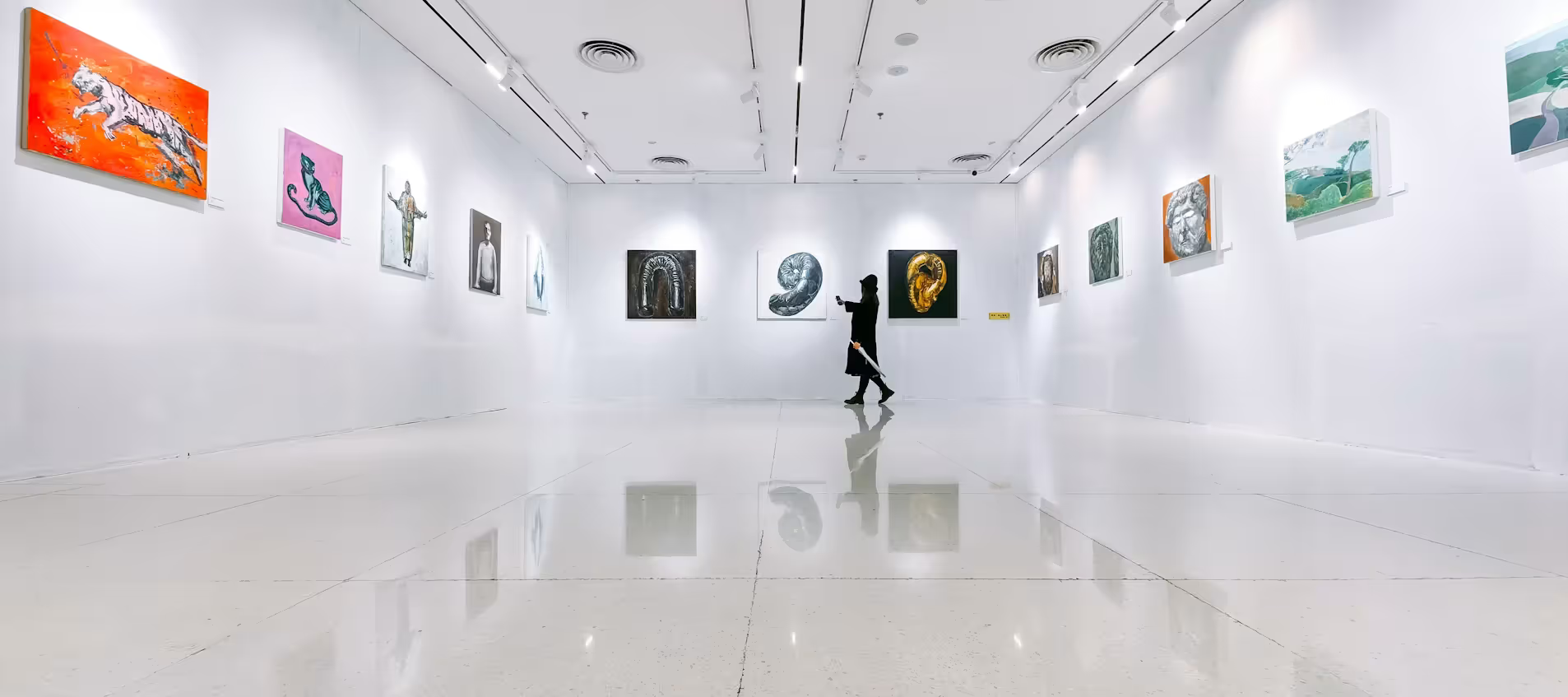
The excitement of an art auction is unlike any other experience in the collecting world. A room filled with anticipation, the rhythmic cadence of the auctioneer, and the rapid exchange of bids create an atmosphere that blends scholarship, competition, and opportunity. Whether conducted in a historic saleroom or through a digital platform, auctions continue to play an important role in shaping the global art market.
For many first-time collectors, however, auctions can appear intimidating. Terms such as reserve price, buyer's premium, estimate, and hammer price are unfamiliar, while the fast pace of bidding can make even experienced buyers hesitate. Without preparation, enthusiasm can quickly lead to impulsive decisions that exceed both expectations and budgets.
Yet auctions are not simply places where artworks change hands. They are valuable sources of market information. Every catalogue, condition report, and sale result offers insight into artist demand, collecting trends, and price history. Even collectors who never intend to place a bid can learn a great deal by observing how the auction process works.
Understanding auctions also helps collectors appreciate the relationship between galleries, museums, private collections, and the secondary market. Works offered at auction often carry decades of provenance, exhibition history, and scholarly documentation, making them important reference points within the broader collecting landscape.
Approaching an auction with knowledge rather than emotion transforms the experience. Instead of chasing the excitement of competition, informed collectors focus on research, authenticity, condition, and long-term collecting goals. Successful bidding is rarely about reacting in the moment—it is the result of careful preparation long before the first lot appears on the podium.
Understanding How Art Auctions Work
At its core, an auction is a public sale in which artworks are offered to the highest bidder. Before the sale, the auction house publishes a catalogue describing each lot, including the artist, title, medium, dimensions, provenance, exhibition history where available, and an estimated price range.
These estimates are intended as guidance rather than guarantees. Some artworks sell below expectations, while others attract intense competition and achieve prices far beyond their estimates. The final amount accepted by the auctioneer is known as the hammer price, which represents the successful bid before additional charges are applied.
Collectors should remember that the hammer price is rarely the total amount paid. Most auction houses charge a buyer's premium, an additional fee added to the final price. Taxes, shipping, insurance, and import duties may also apply depending on the artwork and the buyer's location.
Understanding these costs before bidding allows collectors to establish realistic budgets and avoid unexpected expenses after the sale.
Primary and Secondary Markets
One of the most important distinctions new collectors should understand is the difference between the primary and secondary art markets.
The primary market is where artworks are sold for the first time, usually through the artist or a representing gallery. Prices are typically established in consultation with the artist and gallery, and the proceeds directly support the artist's career.
The secondary market, by contrast, involves artworks being resold by collectors, dealers, estates, or institutions. Auction houses operate primarily within this market, where prices are influenced by previous sales, collector demand, rarity, condition, provenance, and broader market trends.
Understanding this distinction helps collectors place auction results within the wider context of an artist's career and the evolving art market.
Research Before You Raise Your Paddle
Experienced collectors rarely make bidding decisions on auction day alone. Most of the work happens beforehand through careful research.
Begin by reading the auction catalogue thoroughly. Reputable auction houses provide detailed information about each lot, including the artist, title, date, medium, dimensions, provenance, exhibition history, literature references, and estimated value. This information forms the foundation of your evaluation.
Next, compare the artwork with other pieces by the same artist. Consider factors such as subject matter, scale, rarity, condition, and the period in which it was created. Previous auction results can provide useful context, but they should be viewed as reference points rather than guarantees of future value.
Whenever possible, attend the pre-sale viewing. Seeing an artwork in person reveals details that photographs often cannot capture, including surface texture, colour accuracy, framing, and overall presentation. Even experienced collectors prefer direct observation before making significant acquisitions.
Why Condition Reports Matter
An artwork's condition plays a significant role in both its long-term preservation and market value.
Auction houses typically provide condition reports upon request, outlining any visible restoration, repairs, surface wear, structural issues, or conservation treatments. Reviewing this report carefully helps collectors understand whether the artwork has undergone previous restoration and whether any issues may affect future conservation.
Minor restoration is common, particularly for older works, and does not necessarily reduce desirability. What matters most is transparency and professional documentation.
If anything within the report is unclear, ask questions before bidding. Professional specialists are there to explain terminology and provide additional information where appropriate.
Careful review of a condition report often prevents costly surprises after a purchase.
Understanding the Buyer's Premium
One of the most common surprises for first-time bidders is discovering that the hammer price is not the final amount they will pay.
Most auction houses charge a buyer's premium, which is added to the successful bid. Additional costs such as taxes, shipping, insurance, customs duties, or framing may also apply depending on the location of the artwork and the buyer.
For example, a successful bid that appears comfortably within your budget may exceed it once these additional charges are included.
Before participating in any auction, calculate your maximum total expenditure rather than focusing solely on the hammer price.
Establishing this limit beforehand encourages disciplined bidding and reduces the likelihood of emotional overspending during competitive moments.
Develop a Clear Bidding Strategy
Preparation often determines success more than speed.
Before the auction begins, decide on the maximum amount you are prepared to spend—including all additional fees—and commit to that figure. This discipline prevents excitement from influencing financial decisions.
Some collectors prefer entering bids early to establish interest, while others wait until later stages of the bidding process. Neither approach guarantees success. The most effective strategy is simply remaining patient and refusing to exceed your predetermined budget.
If bidding becomes more competitive than expected, walking away is often the wisest decision. Another opportunity will almost always arise.
Successful collectors understand that missing one artwork is preferable to regretting an impulsive purchase.
Online Auctions and Digital Bidding
Online bidding has transformed the accessibility of the global art market.
Collectors can now participate in auctions from virtually anywhere in the world, opening opportunities that were once limited to those able to attend major auction houses in person.
Digital platforms provide high-resolution images, condition reports, catalogue essays, and live bidding interfaces that closely replicate the traditional auction experience.
While convenience has increased, the principles remain unchanged. Research, provenance, condition, authenticity, and budgeting remain just as important in an online auction as they are in a physical saleroom.
Collectors should also ensure they understand the platform's bidding procedures, payment policies, shipping arrangements, and buyer protections before participating.
Common Mistakes New Bidders Should Avoid
Even experienced collectors occasionally make mistakes, but many common errors can be avoided through preparation.
Bidding Emotionally
Competitive bidding can encourage buyers to exceed their planned budget. Maintaining discipline is one of the most valuable skills a collector can develop.
Ignoring Additional Costs
Always calculate the buyer's premium, taxes, shipping, insurance, and any applicable import duties before placing a bid.
Skipping Provenance Research
Never assume catalogue information answers every question. Review provenance carefully and ask for clarification whenever necessary.
Overlooking Condition Reports
Photographs rarely reveal every detail. Understanding an artwork's physical condition is an essential part of responsible collecting.
Buying Only for Investment
Market performance is unpredictable. Purchase artworks because they genuinely contribute to your collecting vision rather than relying solely on potential financial appreciation.
Beyond the Auction Room
Attending auctions offers valuable education even when you do not intend to buy.
Observing bidding behaviour, studying catalogue essays, examining artworks during preview exhibitions, and following sale results all contribute to a deeper understanding of the art market.
Many experienced collectors spend years attending auctions before making major acquisitions. This patient approach builds confidence while developing an informed perspective on pricing, rarity, and collector demand.
Over time, auctions become more than marketplaces—they become classrooms where collectors learn how the art world evaluates significance, provenance, and quality.
Collector's Insight
Winning the bidding is only the final step. The real success comes from the research, discipline, and preparation that happened before the auction even began.
Conclusion
Art auctions remain one of the most dynamic environments within the collecting world. They bring together artworks with rich histories, experienced collectors, galleries, institutions, and market specialists, creating opportunities to acquire remarkable pieces while deepening an understanding of the art market.
For first-time bidders, the experience becomes far less intimidating when approached with preparation rather than urgency. Researching catalogues, reviewing provenance, studying condition reports, understanding fees, and establishing a clear budget all contribute to confident decision-making.
Ultimately, successful collecting is not measured by how often you win a bid but by the quality of the decisions you make. Patience, knowledge, and discipline consistently outweigh impulse, ensuring that each acquisition strengthens a collection built to last.
Whether you're preparing for your first auction or expanding an established collection, explore more expert guides, artist profiles, market analysis, and collecting insights from ModernPress.
Related Story


Thomas Ashworth
Writer and researcher specializing in auction houses, market intelligence, collecting behavior, and the business side of the art world.