
An exhibition presents finished artworks. A museum preserves them. A collector displays them. But the story of every artwork begins somewhere far quieter.
It begins inside the artist's studio.
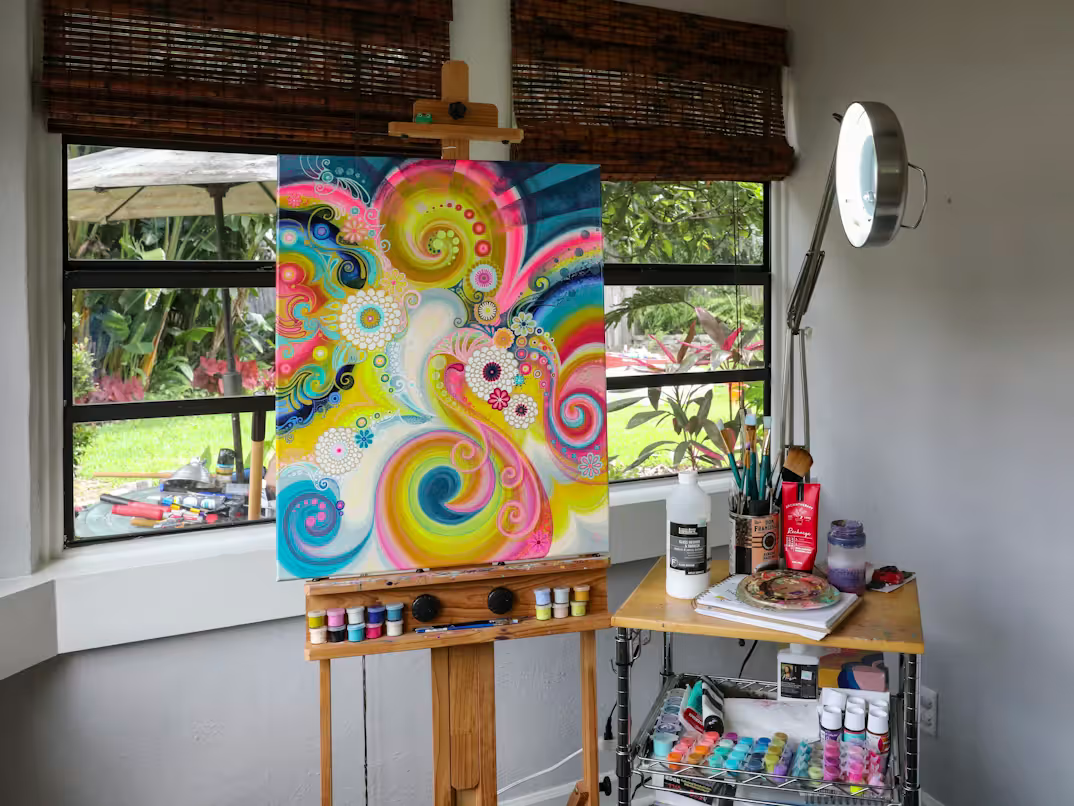
Unlike the polished atmosphere of a gallery, the studio is rarely perfect. Canvases lean against unfinished walls. Sketchbooks remain open beside tables covered with brushes, pigments, fragments of clay, photographs, and handwritten notes. Some works are nearly complete, while others may never leave the room at all.
This space is not designed for visitors. It exists for exploration.
Here, artists test ideas that may fail, abandon compositions that never quite work, and return repeatedly to themes that continue to evolve over months or even years. Every painting, sculpture, photograph, or ceramic object carries traces of this invisible process.
For collectors, understanding the studio changes the way finished artworks are viewed. What appears effortless inside a gallery often represents hundreds of decisions involving materials, colour, proportion, composition, and revision. The studio reveals that creativity is rarely a single moment of inspiration. More often, it is a gradual conversation between artist, material, and time.
Although every studio reflects the personality of its maker, they share one essential quality: they are places where ideas are allowed to develop without immediate judgement. In a world that often celebrates finished results, the artist's studio reminds us that meaningful work is built through patience, experimentation, and persistence.
More Than a Workspace
People often imagine an artist's studio as simply a room filled with tools and unfinished work.
In reality, it functions as a personal laboratory.
Artists collect books, photographs, natural objects, fabric samples, architectural drawings, handwritten notes, colour studies, and found materials that continue inspiring new ideas. Walls become visual archives where sketches, reference images, and experiments remain visible throughout the creative process.
Nothing is arranged purely for appearance.
Every object has the potential to spark a new connection or solve a creative problem.
For many artists, the studio becomes an extension of their thinking, allowing ideas to remain physically present long enough to evolve into finished works.
Where Experimentation Happens
Finished artworks often appear remarkably confident.
The studio tells a different story.
Many successful works are preceded by countless unsuccessful attempts. Artists experiment with different materials, compositions, colour relationships, textures, and scales before discovering the approach that best communicates their ideas.
Some paintings are repainted several times.
Sculptures may be rebuilt from the beginning.
Photographers produce hundreds of images before selecting only a few.
Ceramic artists accept that firing can produce unexpected results.
Rather than avoiding failure, artists treat experimentation as an essential part of creative practice.
Collectors who understand this process often develop greater appreciation for the finished artwork because they recognise the invisible journey behind it.
Time Is One of the Artist's Most Important Materials
Paint, clay, bronze, wood, paper, and fabric all play important roles within a studio.
Yet one material cannot be purchased.
Time.
Ideas often develop slowly.
An unfinished painting may remain untouched for weeks before the artist returns with a fresh perspective. A sculpture might evolve through dozens of small adjustments. Photographs may be revisited repeatedly before the final print is produced.
The studio provides the freedom for this gradual development.
Rather than demanding immediate results, it allows artists to observe, reflect, revise, and refine their work until it genuinely represents their intentions.
For collectors, recognising the importance of time encourages appreciation for the patience that exceptional craftsmanship requires.
Daily Routines Inside the Studio
No two artists organise their studios in exactly the same way, yet many share routines that provide structure without limiting creativity.
Some begin the day by making quick sketches before touching larger works. Others spend quiet mornings reading, researching, or reviewing unfinished pieces from previous sessions. Sculptors may prepare materials before beginning physical work, while photographers sort contact sheets or review digital images before planning the next series.
These routines are rarely rigid schedules. Instead, they create space for sustained concentration while allowing ideas to develop naturally.
Many artists also work on several projects simultaneously. If progress slows on one painting or sculpture, attention shifts to another piece until fresh perspective returns.
For visitors, the studio often appears filled with unfinished work. For the artist, every incomplete object represents a stage within an ongoing conversation rather than an abandoned idea.
Tools Reveal Creative Thinking
Every studio contains tools, but the most interesting ones are not always expensive or specialised.
A painter may rely on brushes worn smooth through years of use. A ceramic artist keeps handmade shaping tools beside blocks of clay. Photographers surround themselves with cameras, lighting equipment, contact sheets, and carefully organised archives. Sculptors work with chisels, modelling tools, measuring instruments, and material samples collected over time.
Equally important are sketchbooks.
Many artists consider them the most valuable objects in the studio because they preserve early ideas, visual experiments, colour studies, written observations, and compositions that may later develop into finished works.
Collectors who see these notebooks often gain a deeper understanding of artistic practice. Finished artworks begin to feel less like isolated achievements and more like chapters within a much longer creative process.
Why Studio Visits Matter
Among collectors, curators, and gallery directors, few experiences are considered more valuable than a studio visit.
Unlike exhibitions, which present completed works, the studio reveals the artist's way of thinking. Visitors encounter unfinished paintings beside completed ones, discarded experiments alongside successful ideas, and materials waiting to become future projects.
Conversations inside the studio often focus less on individual artworks and more on broader questions.
What inspires the artist?
How has the work changed over time?
Which ideas continue returning?
What challenges remain unresolved?
These discussions provide context that rarely appears in exhibition labels or catalogues.
For collectors, studio visits encourage informed appreciation. Rather than responding only to the finished object, they begin understanding the artist's wider practice and long-term creative direction.
Common Misconceptions About Artist Studios
Several misconceptions shape expectations about creative spaces.
"Studios are always perfectly organised."
Many studios are lively working environments where sketches, materials, and unfinished projects naturally accumulate. Creative progress rarely follows perfect order.
"Artists wait for inspiration."
While inspiration certainly plays a role, most artists rely on consistent practice. Showing up regularly and continuing to work often proves more important than waiting for the perfect idea.
"Finished works appear quickly."
Exceptional artworks frequently develop through months of revision, experimentation, and reflection. What appears effortless in a gallery often represents hundreds of creative decisions.
"Every artwork begins with a complete plan."
Many artists begin with only a rough direction. The finished work emerges gradually through dialogue with materials, observation, and unexpected discoveries made during the process.
Understanding these realities encourages greater appreciation for the discipline behind artistic practice.
Why Studios Continue to Inspire
The artist's studio occupies a unique place within the cultural world because it reminds us that creativity is a process rather than a product.
Every unfinished canvas, clay model, photograph, or sketch represents a willingness to experiment without certainty. The studio encourages risk, curiosity, and patience—qualities that remain essential to meaningful artistic development.
Collectors often describe studio visits as transformative experiences because they replace the idea of artistic genius with something far more relatable: thoughtful work carried out consistently over time.
The studio demonstrates that remarkable art rarely appears fully formed.
It evolves through observation, revision, persistence, and countless small decisions that gradually shape an idea into its final form.
Collector's Insight
Seeing an artist's studio changes how you look at finished artworks. You begin noticing not only the final result, but also the countless decisions, revisions, and experiments that made it possible.
Conclusion
The artist's studio is where creativity exists in its most honest form. Long before an artwork enters a gallery, museum, or private collection, it begins as a question explored through sketches, materials, experimentation, and patient observation. This environment reveals that artistic practice is built not on sudden inspiration alone but on sustained curiosity and disciplined craftsmanship.
For collectors, understanding the studio enriches every future encounter with art. Finished works become more than beautiful objects—they become evidence of an evolving creative journey shaped by persistence, research, and countless thoughtful decisions. Studio visits also strengthen the connection between artists and audiences, replacing mystery with meaningful insight into the creative process.
Ultimately, the studio reminds us that every masterpiece once existed as an unfinished idea. It is the place where imagination is tested, refined, and gradually transformed into works that continue inspiring viewers long after they leave the artist's hands.
Discover in-depth editorial features exploring artists, collecting, contemporary creativity, and the stories behind exceptional works of art through ModernPress.
Related Story
How Emerging Artists Build Successful Careers

Genevieve Laurent
Contemporary art journalist focused on emerging artists, gallery exhibitions, and the evolving global art scene. She regularly covers major art fairs and cultural institutions.