
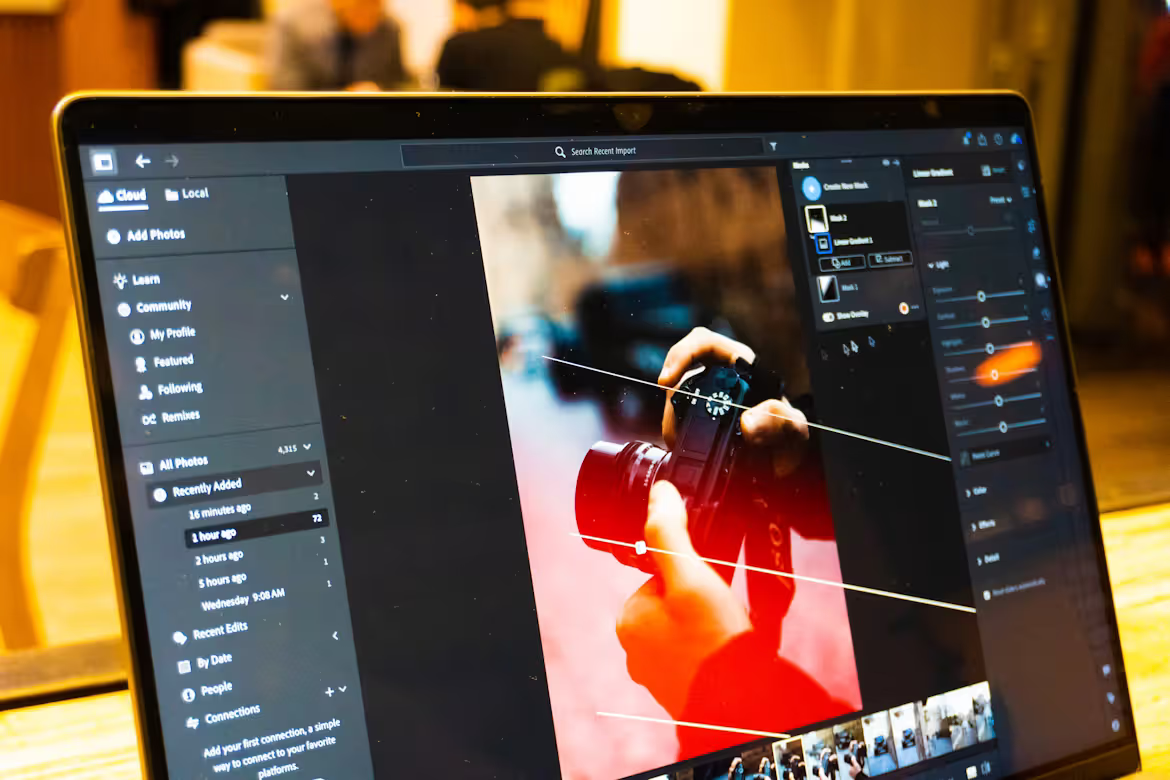
Unlike novels, films, or spoken narratives, photography tells stories in complete silence.
A single image has no soundtrack, dialogue, or written explanation. Yet the strongest photographs often communicate emotion, memory, tension, curiosity, or hope with remarkable clarity. Through careful observation and thoughtful composition, photographers create visual experiences that invite viewers to pause, reflect, and imagine what lies beyond the frame.
This ability to suggest rather than explain is one of photography's greatest strengths. Every decision—from the direction of natural light to the placement of a subject within the composition—shapes how an image is understood. Shadows can introduce mystery, empty spaces may suggest solitude, and subtle gestures often communicate more than dramatic expressions.
Fine art photographers rarely seek to document events exactly as they occurred. Instead, they use the camera as a creative tool for exploring ideas, emotions, and personal perspectives. Their photographs encourage questions rather than providing fixed answers, allowing each viewer to discover individual meanings through careful observation.
Collectors are often drawn to photographs for this very reason. An image that continues revealing new details over time becomes more rewarding with every viewing. Rather than losing its impact through familiarity, it develops greater richness as memories, experiences, and changing perspectives influence interpretation.
Whether working with portraiture, landscape, abstraction, architecture, or still life, fine art photographers demonstrate that storytelling does not require words. Sometimes a single carefully observed moment can communicate more powerfully than pages of description.
Every Frame Is a Creative Decision
To someone encountering a finished photograph, the image may appear spontaneous or effortless.
Behind the camera, however, every photograph is shaped by countless creative choices.
Photographers decide where to stand, what to include, what to exclude, when to release the shutter, and how available light interacts with the subject. Even slight changes in perspective can completely alter the emotional character of an image.
Some artists wait patiently for changing weather or shifting sunlight. Others spend weeks constructing carefully staged scenes where every object contributes to the visual narrative.
These decisions demonstrate that photography is not simply about recording reality.
It is about interpreting it.
Light as a Storytelling Tool
Painters use colour.
Sculptors use form.
Photographers use light.
Light determines atmosphere, reveals texture, guides attention, and influences emotional response. Soft morning light may create calm reflection, while dramatic contrasts between light and shadow introduce tension or mystery.
Many photographers spend more time studying light than operating their cameras.
They observe seasonal changes, weather conditions, architectural reflections, and subtle variations throughout the day before making a single exposure.
Collectors who begin noticing these decisions often develop greater appreciation for photography as an artistic medium rather than merely a technical process.
The Power of What Is Left Unseen
One of photography's most remarkable qualities is its ability to suggest stories beyond the visible frame.
A partially opened door.
An empty chair.
A figure walking away.
A landscape disappearing into fog.
These incomplete moments encourage viewers to participate actively by imagining what happened before or after the photograph was taken.
Rather than limiting interpretation, thoughtful ambiguity creates lasting engagement.
The strongest photographs often remain memorable precisely because they resist simple explanation.
Emotion Lives Beyond the Moment
A photograph captures only a fraction of a second, yet its emotional impact can last for decades.
Unlike moving images, photography asks viewers to pause. A single frame becomes an invitation to observe facial expressions, gestures, textures, weather, architecture, and countless subtle details that might otherwise pass unnoticed.
Fine art photographers understand that emotion is rarely created through dramatic subjects alone.
Instead, it emerges through careful observation.
A quiet street after rainfall.
Morning light entering an empty room.
The posture of someone waiting.
The movement of fabric in the wind.
These ordinary moments become extraordinary because the photographer recognises their emotional potential before pressing the shutter.
Collectors often return repeatedly to photographs that continue revealing new emotional layers over time.
Rather than exhausting their meaning after a single viewing, these images deepen as personal experiences change.
Building Narratives Through Series
Although individual photographs can stand alone, many photographers think in sequences rather than isolated images.
A series allows ideas to unfold gradually.
Several photographs exploring the same landscape, architectural space, community, or theme often communicate more powerfully together than any single image could achieve alone.
Within a carefully edited series, each photograph contributes something different.
One may establish atmosphere.
Another introduces people.
A third focuses on detail.
A fourth creates contrast.
Together, they form a visual conversation that encourages slower observation and richer interpretation.
Collectors frequently appreciate complete photographic series because they reveal how artists develop ideas across multiple images instead of relying on a single decisive moment.
Colour and Black-and-White
Choosing between colour and black-and-white is one of the most deliberate creative decisions a photographer makes.
Colour introduces atmosphere through relationships between tones, seasonal changes, natural light, and environmental details. It often strengthens a photograph's connection to a particular place or moment.
Black-and-white photography shifts attention elsewhere.
Without colour, viewers become more aware of composition, contrast, texture, gesture, shape, and light itself.
Neither approach is inherently superior.
The choice depends entirely on the photographer's intention.
Some subjects communicate greater emotional warmth through colour, while others become more timeless and contemplative when reduced to monochrome.
Understanding this decision helps collectors appreciate photography as a medium built upon interpretation rather than documentation alone.
What Collectors Look For
Successful photography collections rarely develop around technical perfection alone.
Experienced collectors often ask broader questions.
- Does the image remain engaging after repeated viewing?
- Does it communicate a distinctive artistic perspective?
- Is the composition intentional and balanced?
- Does the photograph contribute meaningfully to the artist's wider body of work?
- Does it encourage reflection or conversation?
Print quality also plays an important role.
Paper choice, printing technique, tonal accuracy, and presentation all influence how a photograph is experienced. These physical qualities reinforce that fine art photography should be appreciated as an object crafted with care, not simply as a digital image viewed on a screen.
Many collectors also value photographs that become increasingly meaningful over time, revealing subtle details with every encounter.
Photography in Everyday Living Spaces
One of the greatest strengths of photography is its ability to integrate naturally into everyday environments.
A thoughtfully chosen photograph can transform the atmosphere of a reading room, hallway, office, or living space without overwhelming its surroundings.
Unlike large sculptural works or monumental paintings, photographs often create quieter moments of reflection.
Collectors frequently arrange photographs in pairs or small groups, allowing relationships between images to emerge through shared themes, contrasting perspectives, or complementary tones.
Living with photography encourages regular observation.
Images that initially appear simple often reveal remarkable complexity after months or even years of daily viewing.
This quiet companionship explains why photography remains one of the most personal forms of collecting.
Why Photography Continues to Evolve
Photography changes alongside technology, yet its essential purpose remains remarkably consistent.
Whether created using analogue film, digital cameras, or alternative photographic processes, meaningful photographs continue exploring memory, identity, place, time, and human experience.
New tools have expanded creative possibilities without replacing the importance of observation.
The strongest photographers still rely upon patience, curiosity, careful composition, and thoughtful editing rather than technology alone.
For collectors, this continuity reinforces photography's enduring relevance.
Every generation discovers new ways of seeing the world while building upon traditions established by those who came before.
Photography therefore remains one of the most dynamic and accessible forms of contemporary artistic expression.
Collector's Insight
A memorable photograph does not simply record a scene. It invites you to return, notice something new, and continue the story in your own imagination.
Conclusion
Fine art photography demonstrates that storytelling does not depend upon words. Through thoughtful composition, light, timing, and observation, photographers transform ordinary moments into lasting visual experiences that encourage reflection long after the shutter has closed.
For collectors, photography offers a unique opportunity to live with images that continue evolving through repeated viewing. Each carefully crafted print preserves not only a moment in time but also the artist's perspective, inviting viewers to explore emotion, memory, and meaning through quiet observation.
Whether displayed individually or as part of a broader collection, fine art photographs remind us that powerful stories often emerge from subtle details. In a single frame, photographers capture not only what was seen, but also what continues to be imagined.
Discover thoughtful editorial features exploring photography, contemporary artists, collecting, and visual storytelling through ModernPress.
Related Story

Victoria Pemberton
Photography and visual arts journalist covering fine art photography, contemporary image-making, and the growing role of photography in private collections.