
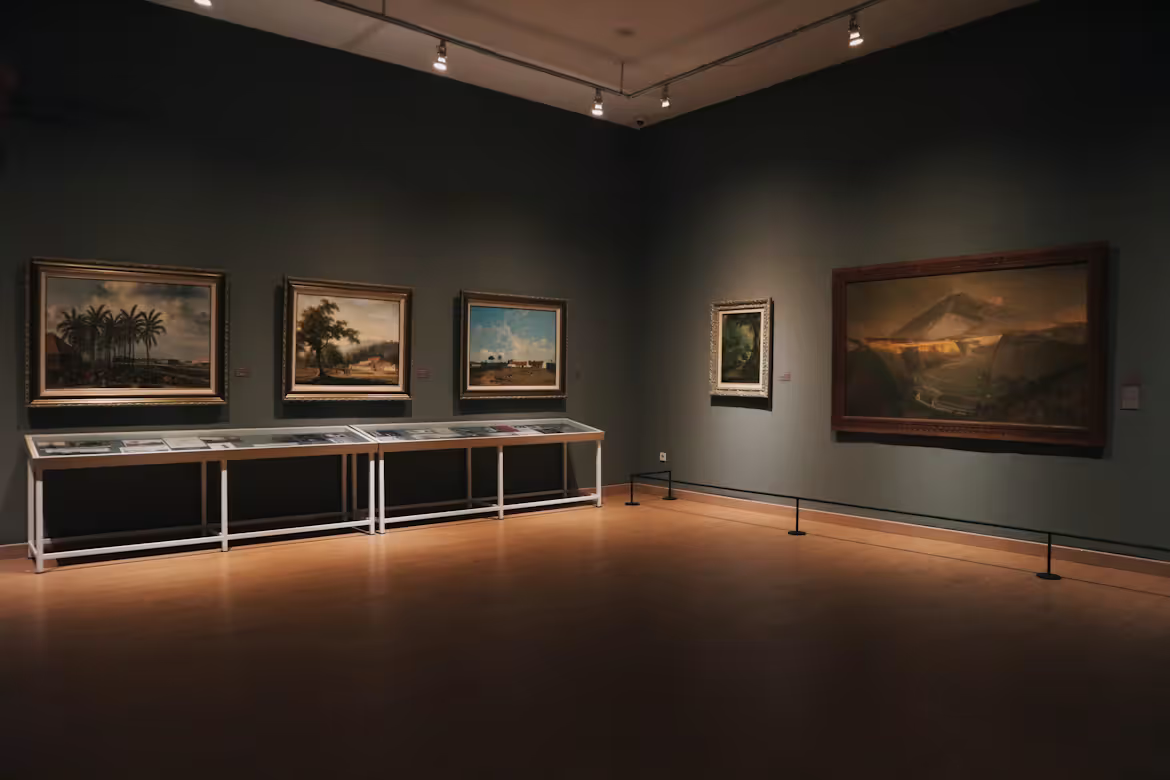
Photography occupies a unique position within the art world. It documents history, captures emotion, explores abstraction, and challenges the way we see everyday life. Unlike painting or sculpture, photography exists at the intersection of artistic vision and technical precision, making it one of the most accessible—and often misunderstood—forms of contemporary collecting.
For many first-time collectors, photography offers an inviting entry point into the art market. Works are available across a wide range of price levels, contemporary photographers continue to experiment with new creative approaches, and galleries regularly introduce collectors to emerging talent working in both traditional and digital formats.
Yet collecting photography involves considerations that differ from other artistic mediums. Questions surrounding edition sizes, print processes, archival materials, authenticity, and long-term conservation all influence how photographic works are evaluated and preserved. Understanding these factors helps collectors make informed decisions while appreciating the craftsmanship that extends beyond the image itself.
Contrary to the common belief that photographs are infinitely reproducible, fine art photography is carefully controlled. Artists typically produce limited editions using museum-quality printing techniques and archival materials designed to ensure exceptional longevity. The value of a photographic work therefore reflects not only the image but also the artist's intent, the quality of production, and the integrity of the edition.
Whether displayed in museums, private collections, or contemporary galleries, fine art photography continues to expand the boundaries of artistic expression. Learning how photographs are created, printed, documented, and collected opens the door to one of the most dynamic areas of today's art world.
What Defines Fine Art Photography?
Not every photograph is created with the intention of becoming a work of art. While documentary, commercial, journalistic, and personal photography all serve important purposes, fine art photography is distinguished by artistic intent.
Artists use photography as a medium for expressing ideas, emotions, narratives, or conceptual investigations. Some construct carefully staged scenes, while others capture spontaneous moments that reveal unexpected beauty within everyday life. Landscape, portraiture, abstraction, architecture, still life, and experimental processes all contribute to the diversity of contemporary photographic practice.
What unites these approaches is the photographer's creative vision. Every decision—from composition and lighting to printing and presentation—forms part of the finished artwork.
For collectors, understanding this intention encourages appreciation beyond technical perfection alone. A compelling photograph succeeds not simply because it is well exposed or sharply focused, but because it communicates something meaningful through the artist's perspective.
Why Photography Has Become Increasingly Collectible
Photography has become one of the fastest-growing areas of contemporary collecting because it combines artistic excellence with relative accessibility.
Compared with unique paintings or sculptures, limited-edition photographic prints often provide collectors with opportunities to acquire museum-quality works at more approachable price points. This accessibility has encouraged a growing number of new collectors to enter the art market through photography.
Museums have also played an important role in elevating photography's status. Dedicated photography departments, major retrospective exhibitions, and expanding institutional collections have reinforced photography's importance within the broader history of art.
At the same time, advances in printing technology have enabled photographers to produce exceptional archival prints with remarkable detail, colour accuracy, and longevity. These developments continue to strengthen confidence among collectors while expanding the creative possibilities available to artists.
Understanding Limited Editions
One of the first concepts every photography collector should understand is the limited edition.
Unlike mass-produced decorative prints, fine art photographs are usually produced in carefully controlled edition sizes determined by the artist. An edition might consist of five, ten, or twenty-five prints, with each print individually numbered and often signed.
For example:
Edition 3/10 indicates that the print is the third impression within an edition of ten.
Once an edition is complete, no additional prints of that size are normally produced, helping preserve rarity and supporting the integrity of the artist's original intention.
Edition size alone does not determine artistic value, but understanding editions provides important context when evaluating photographic works and comparing similar pieces by the same artist.
Print Quality Matters More Than Many Collectors Realise
A remarkable photograph deserves an equally exceptional print. While the image itself often receives the most attention, the printing process plays a defining role in how the artwork is experienced and preserved.
Professional photographers work closely with specialist print studios to produce museum-quality prints that accurately reproduce colour, tonal range, contrast, and fine detail. Every decision—from paper selection to ink technology—influences the final appearance of the work.
Collectors will encounter various printing methods depending on the artist's practice, including pigment ink prints, gelatin silver prints, chromogenic prints, platinum-palladium prints, and other archival processes. Each has its own visual qualities and conservation considerations.
Rather than assuming one process is superior to another, collectors should understand why a particular technique was chosen and how it supports the artist's creative intention.
The Importance of Archival Materials
Unlike decorative prints intended for short-term display, fine art photographs are produced using archival materials designed for long-term preservation.
Museum-quality papers are manufactured to resist fading, discoloration, and deterioration when displayed and stored under appropriate conditions. Similarly, archival pigment inks provide exceptional colour stability compared with many earlier printing technologies.
These materials help ensure that photographs remain visually consistent for decades while reducing the impact of environmental factors such as humidity, ultraviolet light, and airborne pollutants.
Collectors should always ask about the materials used in a print. Understanding paper type, printing method, and recommended display conditions contributes to responsible ownership and long-term preservation.
Certificates, Provenance, and Documentation
As with paintings and sculpture, documentation forms an essential part of collecting photography.
A professionally documented photographic work may include:
- A signed Certificate of Authenticity.
- Edition number.
- Artist's signature.
- Title and year of creation.
- Printing date where applicable.
- Gallery invoice.
- Exhibition history.
- Provenance documentation.
These records establish confidence in the artwork while contributing to its long-term history.
Maintaining documentation alongside purchase records also benefits future owners by preserving the photograph's provenance and supporting scholarly research.
Framing and Display Considerations
Presentation influences both the visual impact and long-term preservation of a photograph.
Professional framing using conservation-quality materials protects prints from environmental damage while enhancing their appearance. Acid-free mounts, UV-protective glazing, and appropriate backing materials help minimise deterioration over time.
When displaying photographs at home, collectors should avoid:
- Direct sunlight.
- High humidity.
- Excessive heat.
- Poor ventilation.
- Areas with frequent temperature fluctuations.
Even museum-quality materials benefit from stable environmental conditions.
Thoughtful framing is therefore both an aesthetic decision and an important conservation practice.
Caring for a Photography Collection
Collecting extends beyond acquisition. Every photograph requires thoughtful care throughout its lifetime.
Store documentation separately but securely alongside purchase records. Avoid unnecessary handling of prints, particularly unframed works, and always use clean hands or conservation gloves when appropriate.
If a photograph requires cleaning or conservation, consult a qualified professional rather than attempting restoration independently.
Many collectors also maintain digital inventories containing photographs of each artwork, edition information, dimensions, purchase dates, and provenance records. This practice simplifies insurance, collection management, and future research.
Responsible stewardship preserves both artistic and historical value.
Common Mistakes New Photography Collectors Should Avoid
Beginning collectors often make similar mistakes, many of which can be avoided through careful research.
Buying Decorative Prints Instead of Fine Art
Limited-edition fine art photographs differ significantly from mass-produced decorative reproductions. Understanding this distinction is fundamental.
Ignoring Edition Information
Edition size, numbering, and artist signatures provide important context. Always confirm these details before purchasing.
Focusing Only on Technical Perfection
A technically flawless image is not necessarily a compelling work of art. Artistic intention, originality, and emotional impact remain equally important.
Overlooking Documentation
Certificates of Authenticity, invoices, and provenance records should always accompany significant purchases.
Displaying Prints Improperly
Poor lighting and unsuitable environmental conditions can gradually damage even museum-quality photographs.
Thoughtful preparation prevents many of these issues while helping collections remain in excellent condition.
Why Photography Continues to Shape Contemporary Art
Photography occupies a remarkable position within today's cultural landscape.
It records history while questioning memory. It documents reality while embracing abstraction. It reflects technological innovation while remaining deeply personal.
Contemporary photographers continue expanding the medium through experimental printing techniques, mixed media, digital technologies, and conceptual practice. Museums, galleries, and collectors increasingly recognise photography not as a secondary artistic discipline but as one of the defining creative mediums of modern culture.
For collectors, this ongoing evolution creates exciting opportunities to discover artists whose work captures the complexities of contemporary life through uniquely photographic perspectives.
Collector's Insight
When collecting photography, look beyond the image itself. The edition, print quality, archival materials, and documentation are all integral parts of the artwork.
Conclusion
Fine art photography offers collectors a unique opportunity to experience the intersection of artistic vision and technical craftsmanship. Every carefully produced print reflects countless creative decisions—from composition and lighting to paper selection and archival printing—making photography one of the most rewarding mediums to collect.
Understanding editions, provenance, conservation, and presentation enables collectors to appreciate photographic works beyond their immediate visual appeal. These considerations not only protect the artwork but also deepen appreciation for the artist's intention and the medium itself.
Whether your interests lie in contemporary portraiture, landscape, abstraction, documentary practice, or conceptual photography, collecting begins with the same qualities that define every meaningful collection: curiosity, research, patience, and a genuine connection with the work.
Discover thoughtful editorial features exploring photography, contemporary artists, collecting guides, exhibitions, and the evolving visual culture shaping today's art world.
Related Story

Victoria Pemberton
Photography and visual arts journalist covering fine art photography, contemporary image-making, and the growing role of photography in private collections.