
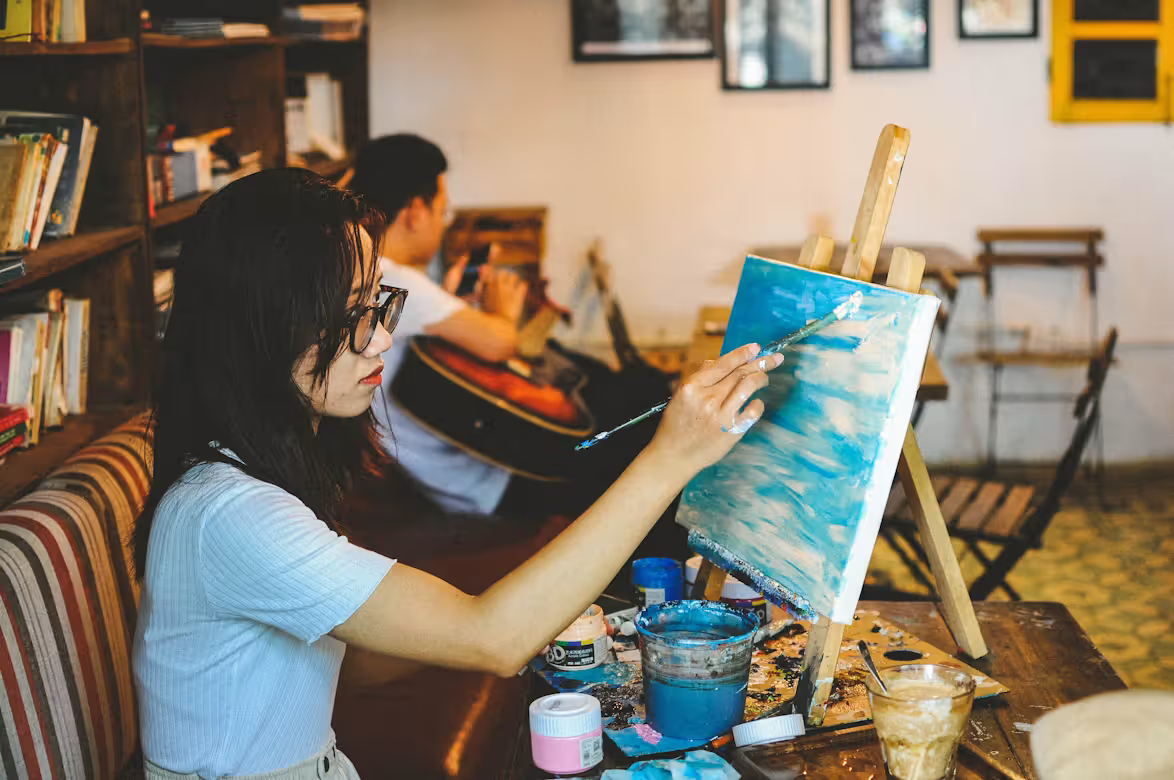
Every celebrated artist begins in the same place—with uncertainty.
Before museum retrospectives, international exhibitions, and established collector bases, artists spend years developing their ideas through experimentation, education, observation, and persistence. Many work quietly in modest studios, refining techniques, questioning assumptions, and producing bodies of work long before wider recognition arrives.
The term emerging artist is often misunderstood. It does not simply describe someone who is young or new to art. Instead, it refers to artists who are in the early stages of establishing a professional practice. They may already exhibit regularly, collaborate with galleries, participate in residencies, or receive critical attention, even while continuing to build their reputation.
For collectors, discovering emerging artists can be one of the most rewarding aspects of collecting. It offers opportunities to engage directly with creative practices as they evolve, fostering relationships built on shared curiosity rather than established reputation. These connections often provide deeper insight into an artist's ideas, influences, and long-term ambitions.
Building a sustainable artistic career, however, requires far more than talent alone. Artists navigate practical challenges alongside creative ones, balancing studio work with exhibitions, research, networking, grant applications, and professional development. Success rarely follows a straight line. Instead, it grows through resilience, thoughtful decision-making, and a willingness to continue creating even when recognition arrives slowly.
Understanding this journey encourages greater appreciation for the dedication behind every finished artwork. It also reminds collectors that supporting emerging artists contributes directly to the future of contemporary culture.
Defining an Artistic Practice
An emerging artist's career is shaped not by individual artworks but by the gradual development of a consistent artistic practice.
Rather than producing isolated pieces, artists begin exploring recurring questions, materials, and visual ideas that connect one project to the next. Over time, these relationships become increasingly clear, forming a distinctive body of work.
This process rarely happens quickly.
Many artists revisit similar themes over several years, allowing their ideas to evolve naturally through research, experimentation, and critical reflection.
Collectors often find these early developments particularly fascinating because they reveal how an artist's creative identity gradually takes shape.
The Studio as a Place of Growth
The studio remains central to every emerging artist's development.
It is here that new techniques are tested, unsuccessful experiments become valuable lessons, and ambitious ideas gradually become realised works.
Emerging artists often produce far more work than audiences ever see.
Sketches, prototypes, material studies, and abandoned compositions all contribute to creative progress, even if they never leave the studio.
Understanding this invisible process encourages collectors to value artistic development as much as finished results.
The strongest careers are built through continuous learning rather than immediate perfection.
Building Professional Relationships
Creative practice flourishes within a wider community.
Emerging artists regularly engage with curators, gallery directors, writers, educators, fellow artists, conservators, and collectors. These relationships encourage dialogue, constructive feedback, and opportunities for collaboration.
Professional networks also introduce artists to exhibitions, residencies, publications, and educational programmes that help expand both visibility and experience.
For collectors, these connections provide valuable context.
Understanding how an artist participates within the broader cultural landscape often reveals as much about their long-term potential as the artworks themselves.
Artist Residencies and Creative Growth
One of the most valuable opportunities available to emerging artists is the artist residency.
Residencies provide dedicated time, workspace, and supportive environments where artists can focus entirely on developing their practice. Removed from everyday routines, they gain the freedom to experiment with new materials, conduct research, collaborate with peers, and explore ideas that may not yet be ready for exhibition.
Many residencies also encourage cultural exchange by bringing together artists from different countries and disciplines. Painters work alongside photographers, sculptors, architects, designers, and writers, creating conversations that often influence future projects long after the residency has ended.
For collectors, understanding the role of residencies provides valuable insight into an artist's development. Rather than viewing artworks as isolated achievements, collectors begin recognising them as part of an evolving creative journey shaped by continuous learning and collaboration.
Exhibitions Build Experience
Exhibitions are important milestones, but they represent only one aspect of an artist's professional development.
Every exhibition provides opportunities to refine presentation, engage with audiences, receive critical feedback, and observe how artworks communicate within different spaces.
Emerging artists often begin by participating in group exhibitions before progressing to solo presentations as their body of work becomes more cohesive. Each experience contributes to greater confidence while encouraging reflection on future directions.
For collectors, following an artist across multiple exhibitions can be especially rewarding. Changes in subject matter, materials, composition, and scale reveal how creative thinking develops over time.
Rather than searching for immediate perfection, thoughtful collectors often appreciate evidence of artistic growth.
Developing a Signature Style
One of the defining moments in an artist's career is the gradual emergence of a recognisable visual language.
This is sometimes described as a signature style, but it should never be confused with repetition.
A mature artistic practice is characterised by consistency of ideas rather than identical appearances. Artists continue exploring familiar questions while allowing techniques, materials, and compositions to evolve naturally.
Some become recognised through distinctive use of colour. Others develop unique approaches to abstraction, photography, sculpture, or mixed media.
The strongest artists avoid becoming predictable.
Instead, they balance continuity with curiosity, ensuring that every new project contributes something meaningful to their broader practice.
Collectors who recognise this balance often gain a deeper appreciation for artistic development beyond individual works.
What Collectors Look For
Supporting emerging artists requires thoughtful observation rather than speculation.
Experienced collectors often ask questions that extend beyond immediate visual appeal.
- Does the artist demonstrate a clear and evolving creative direction?
- Is there consistency across different bodies of work?
- Do the materials support the underlying ideas?
- Does the work encourage repeated viewing?
- Is the artist continuing to learn, exhibit, and refine their practice?
These questions shift attention away from short-term trends and toward long-term artistic development.
Many collectors also value direct conversations with artists whenever possible. Understanding the motivations behind a body of work often strengthens appreciation while creating lasting relationships built upon shared curiosity.
Collecting emerging artists therefore becomes an investment in creativity rather than prediction.
The Importance of Patience
Creative careers rarely develop in straight lines.
Periods of rapid progress are often followed by quieter years devoted to experimentation, research, or personal reflection. Artists continually reassess their ideas, adapt to changing circumstances, and embrace new influences as their practice matures.
Collectors benefit from adopting a similar perspective.
Rather than expecting immediate recognition or constant visibility, they appreciate the gradual evolution of an artist's work over time.
Patience allows both artists and collectors to focus on what matters most: the quality, originality, and authenticity of the creative practice itself.
Many of today's respected artists built their careers through years of consistent work long before receiving wider attention.
Their journeys remind us that meaningful artistic achievement is rarely measured by speed.
Supporting the Future of Contemporary Art
Every generation depends upon artists willing to explore unfamiliar ideas.
Emerging artists introduce fresh perspectives that challenge conventions, expand creative possibilities, and reflect the cultural conversations shaping contemporary society.
Collectors play an important role in sustaining this process.
By supporting artists during the early stages of their careers, attending exhibitions, engaging with galleries, and encouraging thoughtful dialogue, collectors contribute directly to the continued vitality of the arts.
These relationships often extend far beyond individual acquisitions.
They become partnerships rooted in shared appreciation for creativity, experimentation, and cultural growth.
Collector's Insight
Collect emerging artists because their work genuinely speaks to you—not because you hope to predict the future. Personal connection remains the strongest foundation for every meaningful collection.
Conclusion
Every established artist begins as an emerging voice, developing ideas through years of experimentation, research, persistence, and continuous learning. Behind every successful career lies an evolving practice shaped by thoughtful observation, creative risk-taking, and meaningful relationships with galleries, curators, fellow artists, and collectors.
For collectors, discovering emerging artists offers opportunities to participate in this journey from its earliest stages. Rather than simply acquiring artworks, they support creative development while gaining insight into practices that may continue evolving for decades. These relationships encourage collecting rooted in curiosity, dialogue, and long-term appreciation rather than short-term recognition.
Ultimately, emerging artists remind us that contemporary art is always in motion. Every new generation contributes fresh perspectives that challenge expectations, inspire conversation, and shape the future of creative culture. Supporting these artists is therefore not only an act of collecting—it is an investment in the continued growth of art itself.
Explore thoughtful editorial features on contemporary artists, collecting, creative practice, and the evolving world of modern art through ModernPress.
Related Story
How Emerging Artists Build Successful Careers

Genevieve Laurent
Contemporary art journalist focused on emerging artists, gallery exhibitions, and the evolving global art scene. She regularly covers major art fairs and cultural institutions.