
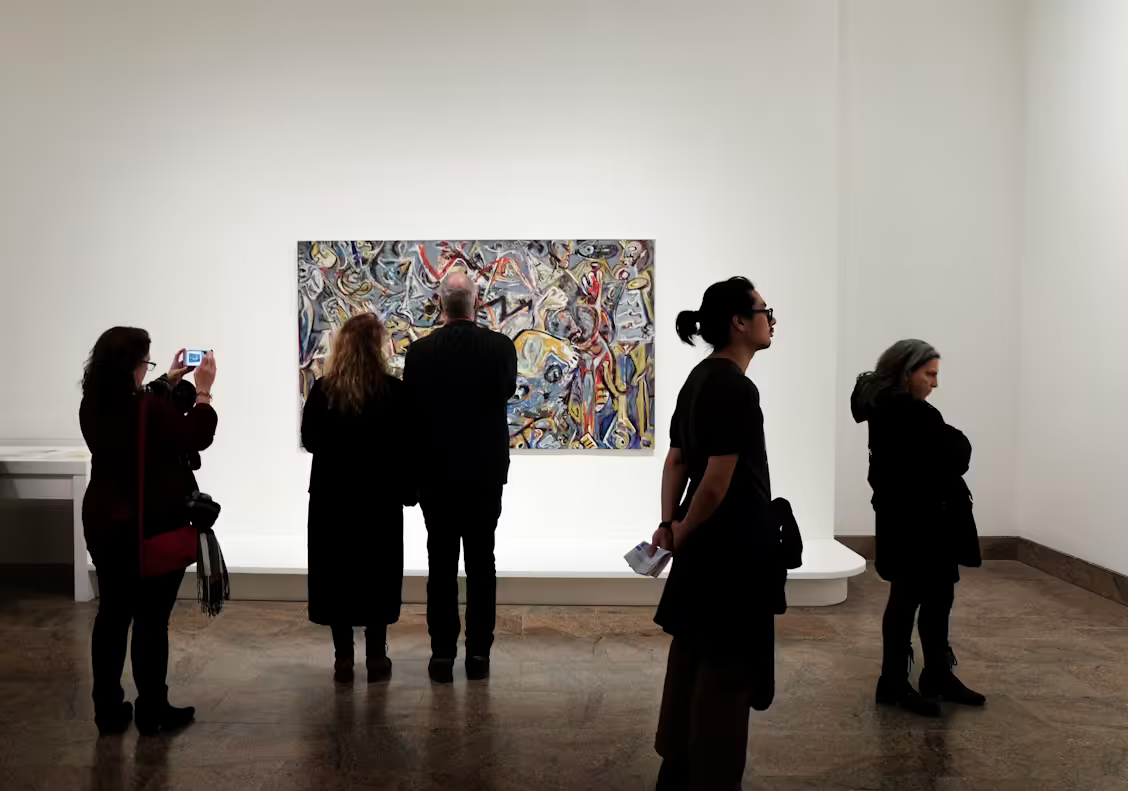
Every two years, some of the world's most ambitious contemporary art exhibitions transform cities into global centres of artistic dialogue. Museums, historic buildings, public spaces, industrial sites, and temporary pavilions become stages for installations, paintings, sculptures, photography, film, and performance, inviting visitors to experience art far beyond the traditional gallery setting.
These events, known as art biennales, have become defining moments in the international cultural calendar. Unlike permanent museum collections or commercial art fairs, biennales focus primarily on ideas. Curators develop broad themes that encourage artists from diverse backgrounds to respond through newly commissioned works and site-specific installations, creating exhibitions that reflect the cultural, political, environmental, and social questions of their time.
For artists, participation in a respected biennale often represents a significant professional milestone. It introduces their work to international audiences while encouraging conversations between curators, critics, museums, collectors, and fellow artists. For visitors, biennales provide an unparalleled opportunity to encounter a remarkable range of contemporary artistic practices within a single event.
Collectors also benefit from attending these exhibitions. Biennales frequently introduce emerging artists years before they achieve wider recognition, offering valuable insight into evolving creative directions rather than established market trends.
Perhaps most importantly, biennales remind us that contemporary art is not simply about objects. It is about ideas, dialogue, experimentation, and the ongoing exchange between cultures that continues shaping artistic practice around the world.
What Is an Art Biennale?
The word biennale comes from the Italian term meaning "every two years."
Within the art world, a biennale is a large-scale international exhibition organised on a two-year cycle. Each edition is usually developed around a central curatorial concept that invites artists to respond through diverse creative approaches.
Unlike museums, which maintain permanent collections, biennales are temporary events. Every edition introduces new artists, new themes, and newly commissioned works, ensuring that each exhibition reflects contemporary ideas rather than repeating previous presentations.
Many biennales extend beyond traditional galleries, transforming public squares, historic landmarks, parks, warehouses, and unexpected urban spaces into exhibition venues.
This flexibility encourages visitors to experience contemporary art within broader architectural and cultural environments.
A Platform for New Ideas
One of the defining strengths of biennales is their commitment to experimentation.
Artists often create ambitious installations, performances, films, and multidisciplinary works specifically for these exhibitions. Freed from many of the practical limitations associated with commercial galleries, they are encouraged to explore complex themes using large-scale, immersive, and innovative approaches.
Curators also use biennales to introduce underrepresented voices and encourage conversations that cross geographical, cultural, and disciplinary boundaries.
As a result, biennales frequently become places where new artistic ideas first gain international visibility.
For collectors, attending these exhibitions offers insight into creative practices that may shape future museum exhibitions, gallery programmes, and broader cultural discussions.
Beyond the Exhibition Space
Although artworks remain central, biennales also function as international meeting places.
Artists, architects, designers, filmmakers, scholars, museum professionals, students, collectors, and visitors gather to exchange ideas through lectures, performances, workshops, guided tours, publications, and public discussions.
These conversations often prove just as influential as the exhibitions themselves.
Rather than presenting contemporary art as something isolated within museum walls, biennales encourage participation, collaboration, and ongoing dialogue between different creative communities.
Their influence therefore extends far beyond the duration of the exhibition.
Public Art Beyond Museum Walls
One of the most distinctive qualities of many biennales is their ability to transform an entire city into an exhibition space.
Rather than limiting artworks to museum galleries, curators often commission installations for historic buildings, parks, industrial warehouses, waterfronts, libraries, theatres, and public squares. Visitors encounter contemporary art while walking through neighbourhoods, crossing bridges, or entering architectural landmarks that already possess rich cultural histories.
This approach fundamentally changes how art is experienced.
Instead of asking audiences to travel exclusively to museums, biennales bring art into everyday environments, encouraging unexpected encounters between artworks and public life.
For artists, these site-specific commissions present unique creative challenges. Every location has its own architectural character, history, and community, requiring artworks that respond thoughtfully to their surroundings rather than simply occupying space.
Collectors often find these projects especially memorable because they demonstrate how contemporary art can interact with architecture, landscape, and local culture in meaningful ways.
The Curator's Vision
Every successful biennale begins with a curatorial concept.
Rather than selecting artworks individually without context, curators develop broad themes that connect diverse artistic practices into a coherent narrative. These themes may explore questions surrounding identity, migration, ecology, technology, memory, architecture, craftsmanship, or cultural exchange.
Artists are then invited to respond through newly created works that contribute individual perspectives while remaining connected to the wider exhibition.
The curator therefore acts as both researcher and storyteller.
Balancing historical context, artistic diversity, spatial design, and visitor experience requires years of preparation and collaboration with artists, institutions, conservators, architects, and exhibition designers.
For visitors, understanding this curatorial process enriches the exhibition experience. Individual artworks become part of a broader conversation rather than isolated creative statements.
Discovering Emerging Artists
Biennales have earned a reputation for introducing audiences to artists who later become significant voices within contemporary art.
Because curators often prioritise originality over commercial visibility, many participating artists are selected for the strength of their ideas rather than their market profile.
This emphasis on experimentation creates valuable opportunities for discovery.
Collectors regularly encounter artists whose work has received limited international exposure but demonstrates exceptional creativity, technical innovation, or conceptual depth.
Many museum exhibitions and gallery programmes later expand upon ideas first presented at biennales, making these events important indicators of emerging artistic directions.
For collectors interested in understanding the future of contemporary art rather than following established trends, biennales remain invaluable learning environments.
What Collectors Gain from Visiting Biennales
While purchasing artwork is rarely the primary purpose of attending a biennale, the experience offers collectors numerous long-term benefits.
A visit encourages slower observation and broader comparison across different cultures, artistic disciplines, and creative approaches.
Collectors often leave with:
- Greater understanding of contemporary artistic practice.
- Exposure to artists from diverse cultural backgrounds.
- Appreciation for large-scale installation and public art.
- Insight into current curatorial thinking.
- Inspiration for future collecting interests.
Perhaps most importantly, biennales encourage openness.
Rather than reinforcing familiar preferences, they invite visitors to question assumptions and explore ideas that may initially feel unfamiliar.
This willingness to engage with new perspectives often strengthens collecting far more than simply following established market success.
Common Misconceptions About Biennales
Although biennales attract international attention, several misconceptions continue to discourage new visitors.
"Biennales are only for art experts."
Many exhibitions are designed to welcome audiences with varying levels of experience. Introductory texts, guided tours, talks, and educational programmes encourage curiosity rather than specialised knowledge.
"Everything is highly conceptual."
While conceptual works are certainly represented, biennales also include painting, sculpture, photography, ceramics, textiles, film, architecture, design, and many other artistic disciplines.
"Collectors attend only to discover investments."
Most experienced collectors attend primarily to learn, observe, and understand contemporary artistic developments rather than to identify future market opportunities.
"A single visit is enough."
Because biennales often present hundreds of artworks across multiple venues, many visitors return several times, discovering new connections with each visit.
Approaching these exhibitions patiently allows ideas to unfold naturally over time.
Why Biennales Continue to Shape Contemporary Culture
Few cultural events bring together such a broad range of artistic voices within one shared framework.
Biennales encourage dialogue between generations, cultures, disciplines, and institutions while providing artists with opportunities to realise ambitious projects that might not exist elsewhere.
Museums, galleries, universities, collectors, critics, architects, and local communities all contribute to these events, creating collaborations that frequently extend beyond the exhibition itself.
This exchange of ideas continues influencing future exhibitions, publications, public art projects, and museum acquisitions long after each biennale concludes.
Rather than presenting definitive answers, biennales invite ongoing conversation.
That openness remains one of their greatest strengths.
Collector's Insight
Attend a biennale with curiosity rather than expectations. The installations that challenge your perspective today are often the ones you remember most years later.
Conclusion
Art biennales have become some of the most influential cultural events in the contemporary world because they encourage dialogue rather than certainty. Through ambitious curatorial concepts, international collaboration, and site-specific artistic projects, they create environments where creativity can respond directly to the questions shaping modern society.
For collectors, biennales provide opportunities to discover emerging artists, deepen understanding of contemporary practice, and experience artworks within carefully considered cultural contexts. Rather than focusing on market trends, they emphasise experimentation, research, and creative freedom.
Whether exploring installations in historic buildings, encountering public artworks throughout a city, or participating in conversations with artists and curators, visitors leave with more than memories of individual works. They gain new ways of seeing the relationship between art, culture, and everyday life.
As contemporary art continues evolving, biennales remain essential platforms where the ideas of today become part of tomorrow's cultural history.
Continue exploring museums, exhibitions, contemporary artists, and the global art world through in-depth editorial features from ModernPress.
Related Story
How Curators Build Exhibitions That Tell Stories

Isabelle Fontaine
Culture writer exploring museums, exhibitions, artistic movements, and the stories behind influential works of art. Her reporting connects art with everyday cultural life.