
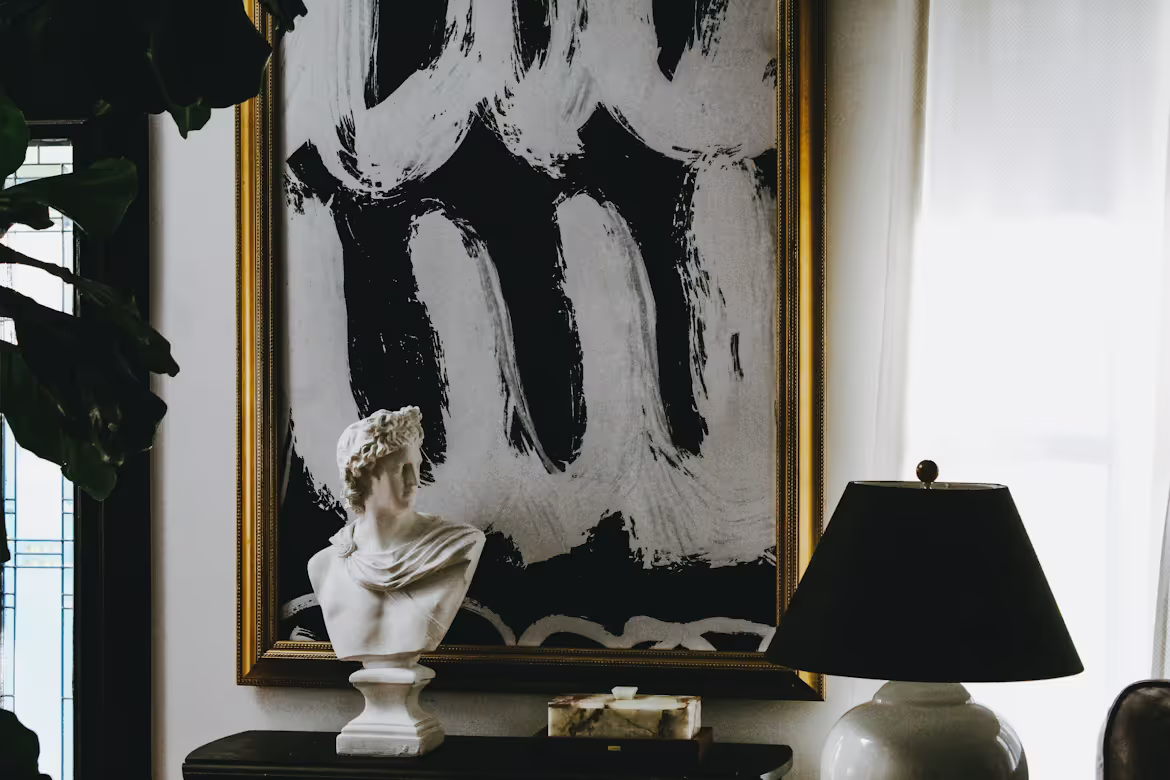
Behind the walls of many of the world's most admired museums lies a surprisingly personal story.
Long before visitors walked through carefully designed galleries, before scholars published catalogues, and before school groups gathered around celebrated masterpieces, these collections often belonged to individuals. They were assembled slowly over decades by people driven not by the desire to build institutions, but by genuine curiosity, admiration, and a lifelong appreciation for art.
Some collectors filled their homes with paintings that reflected changing artistic movements. Others devoted themselves to sculpture, photography, decorative arts, or historical objects connected to a particular culture or period. Few imagined that their private passion would eventually become a place where thousands of people would learn, reflect, and find inspiration.
The transformation from private collection to public museum rarely happens overnight. It requires careful planning, conservation, research, philanthropy, and a long-term vision that extends beyond individual ownership. Decisions about documentation, preservation, accessibility, and education gradually reshape a personal collection into a cultural institution capable of serving future generations.
For collectors, these stories offer an important reminder. Collecting is never solely about acquiring objects. Every thoughtfully assembled collection becomes a record of personal curiosity, cultural appreciation, and intellectual exploration. Whether it ultimately remains within a family or enters the public domain, a collection reflects the values and interests of the person who built it.
Understanding how private collections become museums reveals that the greatest legacy of collecting is often not ownership itself, but the opportunity to share knowledge, creativity, and cultural heritage with others.
A Collection Begins with Personal Curiosity
Few significant collections begin with grand ambitions.
More often, they start with a single artwork that captures someone's imagination.
One acquisition leads to another. Interests become more focused. Visits to museums, galleries, artist studios, and exhibitions deepen understanding, while conversations with curators, historians, and fellow collectors gradually shape individual taste.
Over time, patterns begin to emerge.
Some collectors become fascinated by contemporary painting. Others dedicate decades to photography, sculpture, ceramics, textiles, or decorative arts. Rather than accumulating objects at random, they build collections connected by shared themes, historical periods, artistic movements, or cultural traditions.
This sense of direction distinguishes a collection from a group of unrelated possessions.
Each new acquisition contributes to a larger narrative that reflects the collector's evolving perspective.
Living with Art
Unlike museums, private collections exist within everyday life.
Paintings hang in living rooms where families gather. Sculptures become part of gardens and courtyards. Handcrafted furniture, ceramics, and photographs are experienced daily rather than viewed occasionally behind gallery barriers.
This intimate relationship changes the way collectors engage with art.
Objects are not encountered only during special visits. They become part of ordinary routines, quietly shaping the atmosphere of homes while encouraging continual observation.
Many collectors describe discovering new details in familiar artworks years after acquiring them.
Living alongside art creates a slower, more personal form of appreciation that often becomes the foundation of lifelong collecting.
When a Collection Outgrows a Home
As collections mature, practical questions naturally emerge.
How should artworks be documented?
How will conservation be managed?
Can future generations care for the collection?
Should important works remain accessible to the public?
For some collectors, these questions inspire new possibilities.
Rather than allowing a carefully assembled collection to disappear into storage or become dispersed over time, they begin exploring ways to preserve its integrity while making it available for research, education, and public enjoyment.
The transition may involve partnerships with museums, charitable foundations, universities, or newly established cultural institutions.
At this stage, collecting begins to shift from personal passion toward public responsibility.
Creating a Legacy Beyond Ownership
Every collector eventually reaches a moment when the focus shifts from acquisition to preservation.
Questions that once centred on finding the next artwork gradually evolve into broader considerations about the future of the collection itself. How can decades of careful research, thoughtful acquisitions, and personal discovery continue to benefit others?
For some, the answer lies in creating a lasting public legacy.
Rather than viewing a collection as a private achievement, these collectors begin thinking of themselves as temporary custodians of cultural heritage. Their goal becomes ensuring that future generations can continue learning from, studying, and appreciating the artworks they spent years assembling.
This perspective transforms collecting into an act of stewardship rather than ownership alone.
Conservation Becomes a Priority
Preparing a private collection for long-term public access requires far more than finding exhibition space.
Every artwork must be carefully documented, photographed, researched, and evaluated for its conservation needs. Provenance records are reviewed, condition reports updated, and environmental standards established to protect sensitive materials such as paintings, works on paper, photographs, textiles, and ceramics.
Professional conservators often work alongside registrars, archivists, and curators to ensure that every object can be preserved under appropriate conditions.
These efforts may remain invisible to visitors, yet they form the foundation of every successful museum collection.
Without careful conservation, even extraordinary collections risk gradual deterioration over time.
Research Gives Collections Meaning
A museum is defined not simply by the artworks it holds but by the knowledge it generates.
As private collections become public institutions, research becomes increasingly important.
Curators examine the historical context of artworks, scholars contribute new interpretations, and catalogues document relationships between artists, movements, and cultural developments. Provenance records continue expanding as exhibitions, publications, and conservation projects add new chapters to an artwork's history.
This process transforms individual objects into valuable educational resources.
Visitors no longer encounter artworks solely as beautiful objects but as part of larger cultural narratives that continue evolving through ongoing scholarship.
For collectors, this demonstrates that knowledge is often the greatest contribution a collection can make.
Opening the Doors to the Public
Perhaps the most significant change occurs when a private collection becomes accessible to everyone.
Works that once hung quietly within a family residence begin welcoming students, researchers, artists, and visitors from around the world.
Children experience original artworks for the first time.
University classes study artistic techniques directly from museum collections.
Researchers uncover previously overlooked connections between artists.
Families return repeatedly, discovering something new with every visit.
Public access transforms collecting from a personal passion into a shared cultural experience.
The collection becomes part of a wider conversation that extends far beyond its original owner.
Why Collectors Choose Philanthropy
Not every collector establishes a museum, yet many choose to share their collections through generous acts of philanthropy.
Some donate artworks to existing museums where they complement permanent collections. Others establish charitable foundations that support exhibitions, conservation, educational programmes, or artist residencies. Many also lend artworks to temporary exhibitions, allowing audiences to experience important pieces without transferring ownership.
These contributions strengthen cultural institutions while expanding public access to art.
They also reflect a belief shared by many experienced collectors: great collections achieve their greatest value when they can inspire others.
Philanthropy therefore becomes a natural extension of collecting itself—a way of ensuring that artworks continue contributing to education and cultural life.
A Collection Reflects a Life
Every carefully assembled collection tells two stories at once.
The first belongs to the artists whose creativity shaped each artwork.
The second belongs to the collector whose curiosity, judgement, and dedication brought those works together.
Over decades, individual acquisitions become connected through shared themes, personal interests, historical research, and countless hours spent visiting galleries, museums, artist studios, and exhibitions.
When viewed together, these objects reveal far more than artistic achievement.
They reveal a lifetime of learning.
That personal narrative often becomes one of the most meaningful aspects of a public museum founded upon a private collection.
Collector's Insight
The greatest collections are remembered not for the number of artworks they contain, but for the knowledge, inspiration, and cultural understanding they continue to share with future generations.
Conclusion
Many of today's respected museums began with a single collector following a personal passion. Through years of careful research, thoughtful acquisitions, and responsible stewardship, private collections gradually evolved into public institutions that preserve art, encourage scholarship, and welcome visitors from around the world.
For collectors, these stories offer an inspiring reminder that collecting extends beyond ownership. Every artwork acquired becomes part of a larger narrative shaped by curiosity, education, and cultural appreciation. Whether a collection remains within a family, supports an existing museum, or eventually opens its own doors to the public, its greatest contribution lies in the opportunities it creates for others to learn and engage with art.
Ultimately, private collections become public museums because collectors recognise that cultural heritage grows more meaningful when it is shared. The true legacy of collecting is measured not only by the objects preserved, but by the generations of visitors, students, researchers, and artists who continue to find inspiration within them.
Discover thoughtful editorial features exploring museums, private collections, collecting strategies, and the people preserving artistic heritage through ModernPress.
Related Story
Looking Closely: The Art of Becoming a Better Collector

Sophia Harrington
Luxury collectibles writer focusing on private collections, rare objects, investment-grade collectibles, and the cultural significance of ownership.