
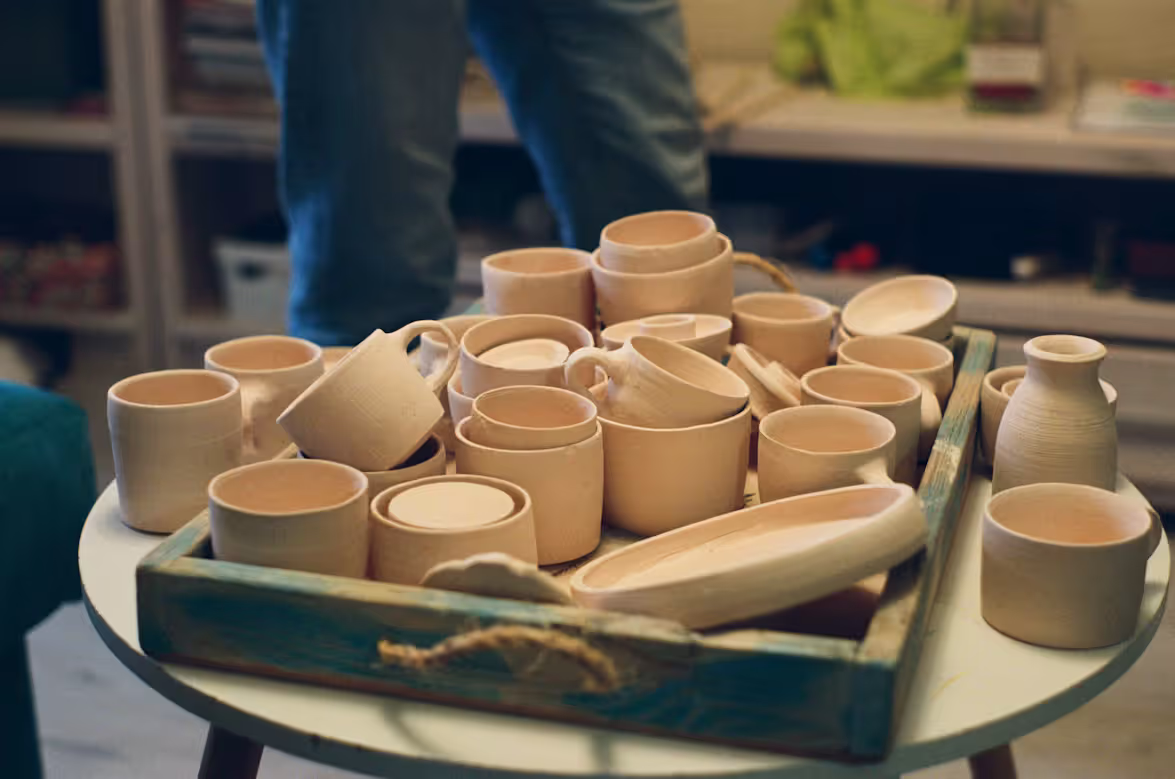
For thousands of years, clay has been transformed into objects that serve both practical and artistic purposes. From ancient vessels used in everyday life to contemporary sculptural forms displayed in galleries and museums, ceramics continue to occupy a unique place within the creative world. They bridge the gap between craftsmanship and fine art, allowing collectors to experience exceptional design through objects that are both tactile and deeply personal.
In recent years, contemporary ceramics have attracted growing attention from collectors, museums, and design galleries. Artists are pushing the boundaries of traditional pottery by experimenting with sculptural forms, innovative glazing techniques, unconventional firing methods, and conceptual approaches that challenge long-held assumptions about the medium.
Unlike industrially manufactured tableware, collectible ceramics are often created individually or in very small editions. Every subtle variation in shape, texture, glaze, and surface reflects the hand of the maker, making each piece distinct even within a limited series.
For collectors, this individuality is part of the appeal. Holding a handcrafted ceramic object reveals evidence of the creative process itself—from the movement of the potter's hands to the unpredictable effects of heat inside the kiln. These qualities cannot be replicated through mass production, giving contemporary ceramics a warmth and authenticity that resonate with collectors worldwide.
Whether displayed as sculptural artworks or integrated into everyday living spaces, contemporary ceramics demonstrate that functional objects can possess extraordinary artistic significance.
Why Contemporary Ceramics Are Gaining Recognition
For much of history, ceramics were appreciated primarily for their practical value. While beautifully crafted pottery has long been admired, museums and collectors often placed greater emphasis on painting and sculpture.
Today, that perception has changed dramatically.
Leading museums now dedicate major exhibitions to ceramic artists, design galleries regularly showcase handmade vessels alongside contemporary sculpture, and collectors increasingly recognise ceramics as an essential part of modern design collections.
This renewed appreciation reflects a broader cultural interest in craftsmanship, sustainability, and slow making. In an age dominated by industrial production, handmade ceramics celebrate individuality, patience, and the beauty of imperfection.
Collectors are drawn not only to visual aesthetics but also to the direct connection between artist, material, and process that ceramics uniquely preserve.
Understanding the Creative Process
Every ceramic artwork begins with raw clay, yet the journey from soft material to finished object involves remarkable technical knowledge.
Artists carefully select clay bodies suited to their intended forms before shaping each piece through wheel throwing, hand building, slab construction, or sculptural techniques.
Once formed, the object is dried slowly before its first firing. It may then receive layers of glaze, oxides, or surface treatments before returning to the kiln for additional firings at carefully controlled temperatures.
Each stage introduces variables that influence the final result. Slight changes in temperature, atmosphere, or glaze chemistry can produce unexpected textures, colours, and surface effects.
Rather than seeking complete uniformity, many contemporary ceramic artists embrace these natural variations, allowing each piece to express the unique character of its making.
Handmade Versus Studio Production
Collectors often encounter both one-of-a-kind works and limited studio editions.
Unique ceramic sculptures offer complete individuality, while carefully controlled editions allow artists to explore recurring forms without sacrificing craftsmanship.
Neither approach is inherently superior. What matters most is the integrity of the artist's practice, the quality of execution, and the conceptual strength of the work.
For collectors, understanding how an object was made—and why a particular production method was chosen—provides valuable insight into its artistic significance.
Materials, Glazes, and Surface Character
One of the defining qualities of contemporary ceramics is the remarkable diversity of materials and finishes available to artists. While clay provides the foundation, the final appearance of a ceramic object is shaped through carefully considered choices of glaze, texture, firing technique, and surface treatment.
Some makers favour smooth matte finishes that highlight the purity of a vessel's form, while others embrace richly layered glazes that create subtle variations in colour and depth. Oxides, slips, ash glazes, and natural minerals all contribute unique visual characteristics, ensuring that no two handmade objects are ever completely identical.
Firing techniques also influence the final result. Electric kilns provide precise control, while gas and wood-fired kilns introduce natural variations that many ceramic artists deliberately embrace. The unpredictable interaction between flame, ash, heat, and glaze often produces surfaces that cannot be repeated exactly, reinforcing the individuality of each piece.
For collectors, these subtle differences are part of what makes contemporary ceramics so rewarding. Looking closely at the surface often reveals the artist's hand and the material's response to the firing process, creating a visual richness that photographs rarely capture fully.
How to Evaluate Craftsmanship
Collecting ceramics begins with learning how to observe carefully.
Rather than focusing solely on decoration, experienced collectors pay attention to the relationship between form, proportion, material, and function. A beautifully made ceramic object often feels balanced from every angle, with thoughtful transitions between curves, edges, and surfaces.
When evaluating a piece, consider questions such as:
- Does the form feel intentional and well resolved?
- Are proportions harmonious?
- Does the glaze complement the overall design?
- Are textures purposeful rather than accidental?
- Does the object communicate the maker's creative vision?
Small irregularities are not necessarily flaws. In handmade ceramics, slight variations often reflect authenticity and the natural character of the making process.
The strongest works achieve a balance between technical mastery and artistic expression.
Building a Ceramic Collection
Many successful ceramic collections begin with a single piece that creates a lasting impression.
Rather than trying to collect every style or technique, experienced collectors often develop a clear focus. Some are drawn to wheel-thrown vessels, while others specialise in sculptural ceramics, porcelain, functional tableware, or experimental contemporary forms.
Developing a collecting theme creates greater cohesion over time. A collection centred on particular materials, forms, firing methods, or artistic ideas often becomes more meaningful than one assembled through impulse purchases.
Visiting galleries, museum exhibitions, ceramic fairs, and artist studios provides opportunities to compare different approaches while deepening appreciation for the diversity of contemporary ceramic practice.
As with all collecting, patience remains one of the greatest advantages. Thoughtfully chosen pieces create collections with stronger personal identity than those acquired quickly.
Displaying Ceramic Objects
Unlike many artworks, ceramics are designed to be experienced in three dimensions.
Display therefore becomes an important part of appreciating each object. Adequate space around a vessel or sculpture allows viewers to observe changing profiles, surface textures, and the interaction between light and form.
Neutral shelving, carefully positioned lighting, and uncluttered surroundings help emphasise craftsmanship without distracting from the object itself.
Some collectors integrate ceramics into everyday interiors, allowing functional pieces to become part of daily routines. Others display them as sculptural artworks within dedicated cabinets or plinths.
Both approaches reflect the unique ability of ceramics to exist comfortably between design and fine art.
Caring for Contemporary Ceramics
Although fired clay is durable, collectible ceramics still benefit from thoughtful care.
Avoid placing valuable objects in unstable locations where accidental knocks or vibrations could cause damage. Large temperature fluctuations should also be avoided, particularly for delicate porcelain or mixed-material works.
Dust objects gently using a soft, dry cloth or a clean microfiber cloth. Abrasive cleaning products should never be used on glazed or unglazed surfaces.
Collectors should retain invoices, certificates, artist information, and exhibition documentation together with purchase records. These materials contribute to provenance while supporting future conservation and collection management.
When moving ceramic objects, always support them from their strongest structural points rather than lifting them by handles, rims, or decorative elements.
Responsible handling preserves both physical integrity and long-term value.
Why Ceramics Continue to Inspire Collectors
The growing popularity of contemporary ceramics reflects more than changing market trends.
Collectors increasingly value objects that celebrate slow craftsmanship, sustainable production, and the visible presence of the maker's hand. In an age dominated by industrial manufacturing, handmade ceramics offer authenticity, individuality, and a tangible connection to creative process.
Every vessel carries subtle evidence of its creation—from fingerprints softened during shaping to unexpected glaze variations produced inside the kiln. These characteristics remind us that beauty often emerges through collaboration between material, artist, and process rather than mechanical perfection.
For many collectors, this human quality gives ceramics an enduring emotional appeal that extends well beyond aesthetics alone.
Collector's Insight
The most memorable ceramic collections are built around curiosity, craftsmanship, and personal connection—not perfection. Choose pieces that continue to reveal new details every time you return to them.
Conclusion
Contemporary ceramics occupy a unique position within today's art and design landscape. They combine centuries of technical knowledge with fresh artistic ideas, producing objects that are both functional and deeply expressive.
For collectors, ceramics offer opportunities to engage directly with craftsmanship in a way few other mediums allow. Every handmade vessel, sculpture, or porcelain form reflects countless creative decisions shaped by material, technique, and the artist's individual vision.
Whether beginning with a single handcrafted bowl or developing a comprehensive collection of contemporary ceramic art, thoughtful collecting begins with observation, research, and an appreciation for the remarkable relationship between maker and material.
As interest in collectible design continues to grow, contemporary ceramics remain among the most rewarding and enduring areas of artistic collecting.
Discover thoughtful editorial features exploring collectible design, craftsmanship, contemporary artists, and collecting guides that celebrate exceptional creative practice.
Related Story

When Architecture Becomes a Work of Art

Alexander Moreau
Design writer and curator covering collectible design, architecture, decorative arts, and contemporary craftsmanship. His work explores the intersection of art, function, and cultural value.